
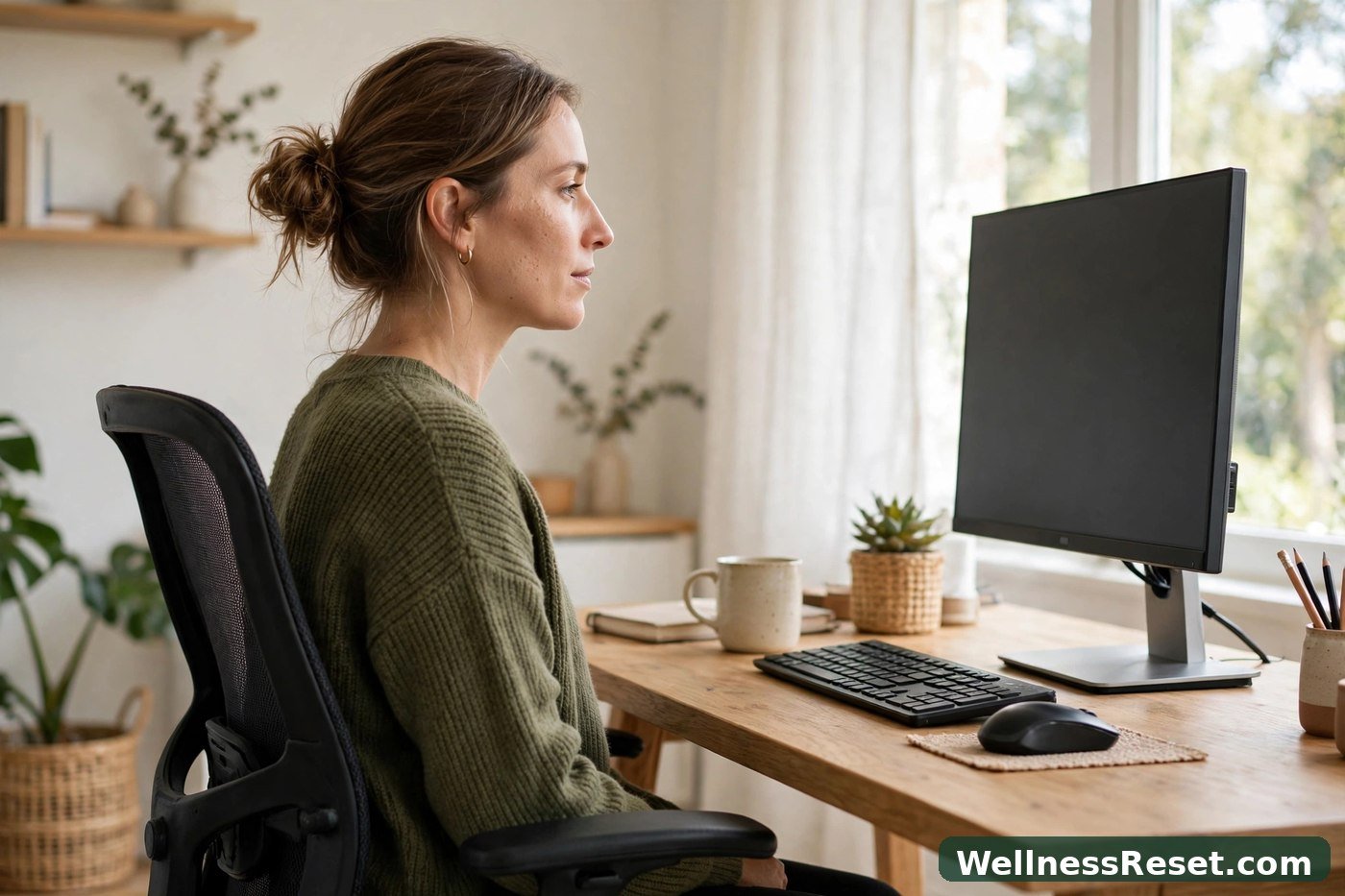
How to Sit Better: 7 Posture Cues for Long Desk Days
Forget everything about “sitting up straight.” That cue has injured more backs than slouching has.
Here’s why: when someone says “sit up straight,” most people shove their chest out, arch their lower back like a startled cat, and hold it with pure tension. Ten minutes later they’re exhausted and slumped worse than before. Physical therapists have a better line: your best posture is your next posture. The goal isn’t one perfect position held for 8 hours. It’s a set of small cues you return to, plus regular movement.
These seven cues take seconds each. Run through them a few times a day — that’s the whole system.
The 7 cues
1. The string from the crown. Imagine a string attached to the crown of your head, gently pulling up. Not yanking — just a suggestion of length. This single image fixes more slouching than any ergonomic chair. Your chin naturally tucks, your chest opens, and you didn’t have to think about five body parts.
2. Shoulders down and back — then drop the “back.” Roll your shoulders up, back, and down. Then forget “back” and keep “down.” Most desk tension lives in shoulders creeping toward ears. Every hour, ask: are my shoulders earrings or shoulders?
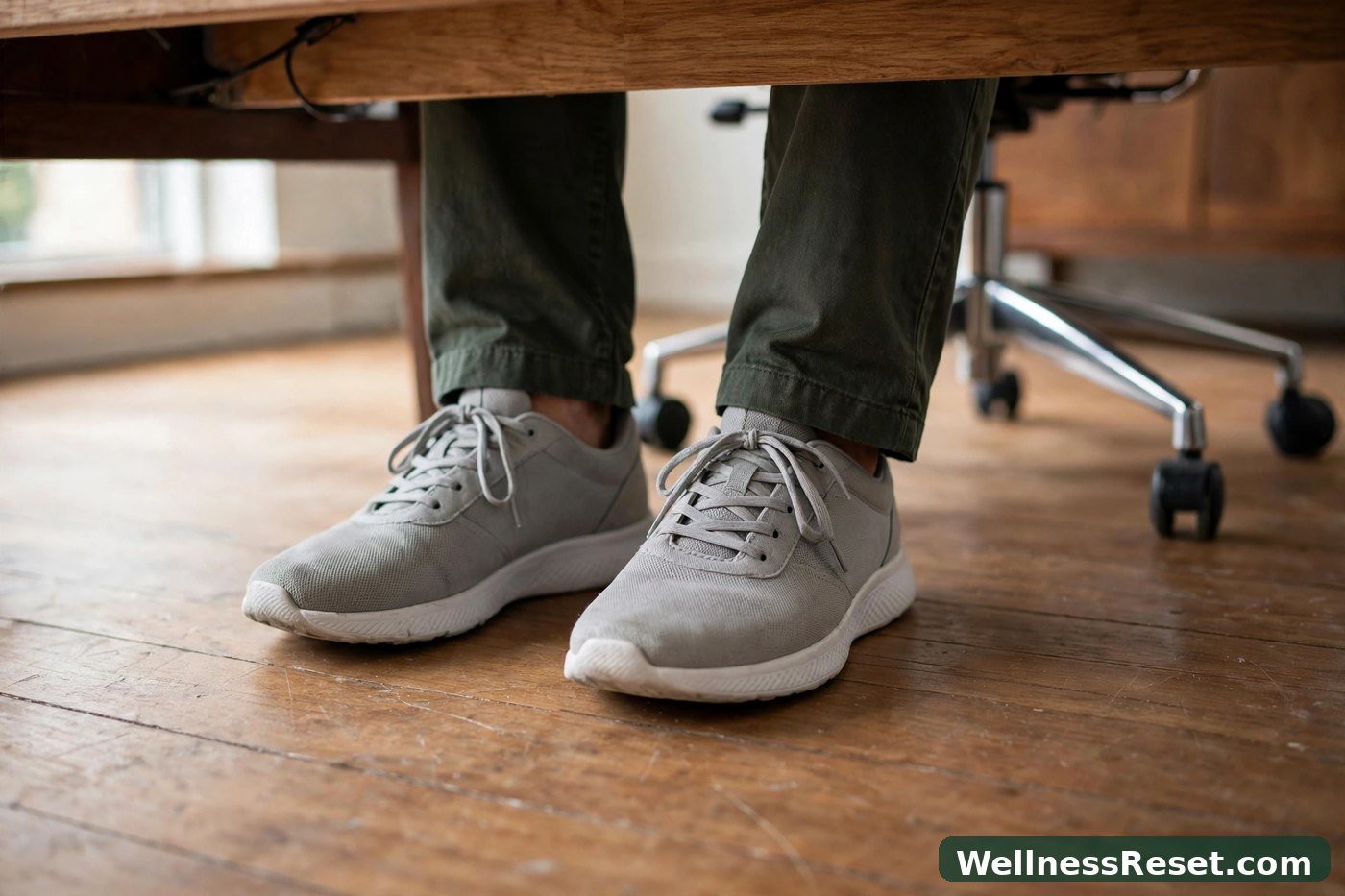
3. The 90-90-90 check. Elbows, hips, knees — each roughly at 90 degrees. Feet flat on the floor (or a box, or a stack of books — nobody’s watching). If your feet dangle, your whole chain compensates. This is the cheapest ergonomic fix in existence.
4. Screen at eye level, arm’s length away. Your gaze should land on the top third of the screen without tilting your head. Laptop on a stack of books + external keyboard is the classic budget fix. Craning down at a laptop for 8 hours is how “text neck” moves from the phone to the desk.
5. Sit back in the chair. The backrest is load-bearing, not decorative. Scoot your hips to the back of the seat so the chair supports your lower back. Perching on the front edge — the “I’m being productive” pose — loads the spine with zero support.
6. The towel roll. Roll a bath towel, place it in the curve of your lower back. This costs nothing and does what a ₹2,000 lumbar pillow does. If your chair has built-in lumbar support, use it — most people never adjust it.

7. Move every 30–45 minutes. The most important cue isn’t a position — it’s a timer. Stand, walk to get water, do 10 shoulder rolls, sit back down differently. The research is consistent: the damage isn’t from sitting, it’s from not moving. Even the perfect posture held for 3 hours straight becomes a bad posture.
The 30-second reset
You don’t need to monitor posture all day. A few times a day, run this:
| Check | Fix in 5 seconds |
|---|---|
| Head drifting toward screen? | String-from-crown cue |
| Shoulders near ears? | Roll up, back, down |
| Slid forward off the backrest? | Scoot hips back |
| Feet tucked under chair? | Flat on floor |
| Been sitting over 45 min? | Stand up, walk, come back |

Link it to something you already do: every time you send an email, refill water, or finish a call. Habit-stacking beats willpower.
Mistakes people make
Buying gear before fixing habits. A ₹15,000 ergonomic chair used with the same slouch is a ₹15,000 slouch. Cues first, gear later.
Chasing perfect posture. There is no single correct position. Bodies are built to shift. The person who changes position 20 times a day beats the person holding “perfect” posture rigidly.
Ignoring the phone. You fix your desk setup, then spend every break bent over your phone. Bring the phone up to eye level for long reads — or better, use breaks for actual movement.
Stretching without strengthening. Stretches relieve; the muscles that hold you upright need some work too. Our desk posture fixes guide covers the movement side — cues plus exercises is the complete package. And if your neck is the problem, not your back, read Text Neck: 6 Stretches.
Sitting through pain. Dull ache that eases with movement is normal desk fallout. Sharp, shooting, or persistent pain is a doctor visit, not a cue adjustment.
Final words
Seven cues, one towel, and a timer. That’s the entire system. Nobody sits perfectly — the people with healthy backs are just the ones who notice sooner and move more often. Start with the string-from-crown and the 30-minute move timer. Add the rest as they become automatic.

FAQ
Is standing all day better than sitting? No — standing still for 8 hours has its own problems (feet, knees, lower back). Variety wins: sit, stand, walk, repeat.
Do posture corrector braces work? They remind you, they don’t train you. Fine as a short-term reminder, but the cues above build the actual habit. Don’t wear one all day — muscles need to work, not be outsourced.
My chair has no lumbar support. What now? The towel roll (cue 6). Seriously. It’s what physios recommend before anything expensive.
How long until better posture feels natural? Most people report the cues becoming automatic in 2–3 weeks of consistent resetting. The movement timer helps more than anything — frequent resets train the habit faster.
Should my knees be above or below my hips? Roughly level, maybe hips a touch higher. If your knees are well above your hips, the chair is too low or too deep — adjust or add a cushion.