
7 Gentle Morning Stretches for Seniors
The first 90 seconds after waking up decide how your whole morning feels. Not your breakfast. Not the news. The 90 seconds when your joints go from “asleep for 7 hours” to “carrying you to the kitchen.”
My mother-in-law used to swing her legs straight out of bed and immediately grab her lower back. Every morning, same wince. Then her physio told her something obvious that nobody had said: joints need a warm-up, exactly like an engine in winter. She started doing five minutes of stretches before her feet touched the floor. The wince disappeared in about two weeks.
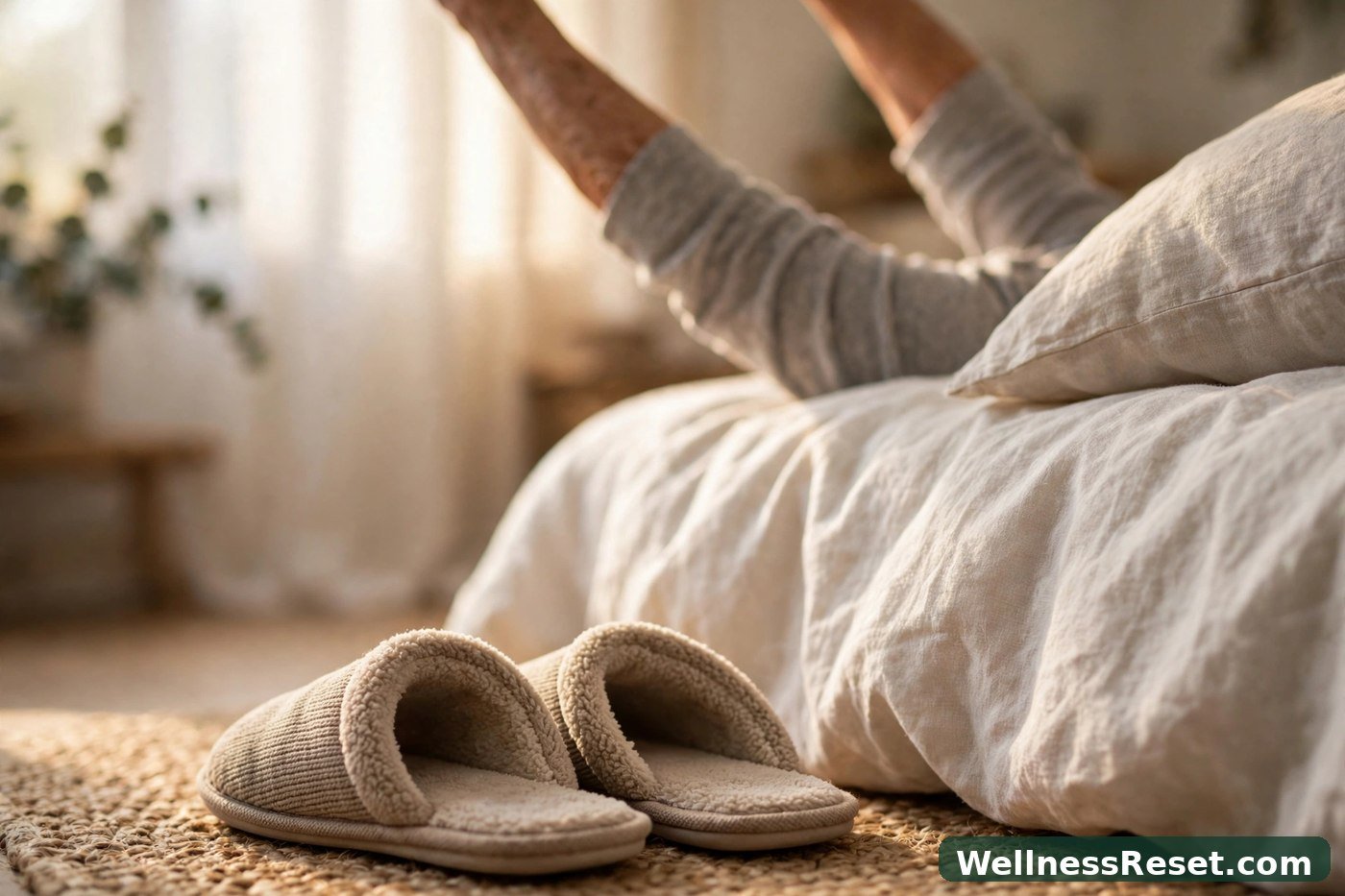
This is not a workout. You don’t get up, you don’t change clothes, you don’t need balance. Seven moves, all done in bed or sitting on its edge.
Why in bed, specifically
Two reasons. First, the mattress supports you — zero fall risk, which matters when morning stiffness makes you wobbly. Second, warmth. Muscles stretch more easily when they’re warm, and under the blanket is the warmest place in your house at 6:30 AM.
If a move feels sharp or pinchy, skip it. Stretch should feel like a gentle pull, never pain.
The 7 stretches
Do them in order. The sequence goes from smallest joints to biggest, which is how the body likes to wake up.
1. Ankle circles (30 seconds each foot). Point your toes toward the ceiling, then draw slow circles — 10 one way, 10 the other. Stiff ankles are the #1 reason mornings feel unsteady. This takes 60 seconds and changes the whole day.
2. Knee rocks (10 reps). Feet flat on the mattress, knees bent. Let both knees fall slowly to the right, then to the left, like a slow windshield wiper. Small range at first. Best for: lower back stiffness.
3. Knee-to-chest (30 seconds each leg). Hug one knee toward your chest — hands behind the thigh, not on the knee joint. Breathe into the stretch. Switch. Best for: hip flexors that shortened overnight.

4. Lying figure-4 (30 seconds each side). Cross your right ankle over your left knee, then gently pull the left knee toward you. You’ll feel it deep in the right hip. This is the antidote to “sitting all day” hips. Switch sides.
5. Chest opener (5 slow breaths). Still lying down: arms out in a T, palms up. Let gravity pull your shoulders toward the mattress. Take five slow breaths and feel the front of your chest open. Best for: rounded shoulders from reading and TV.
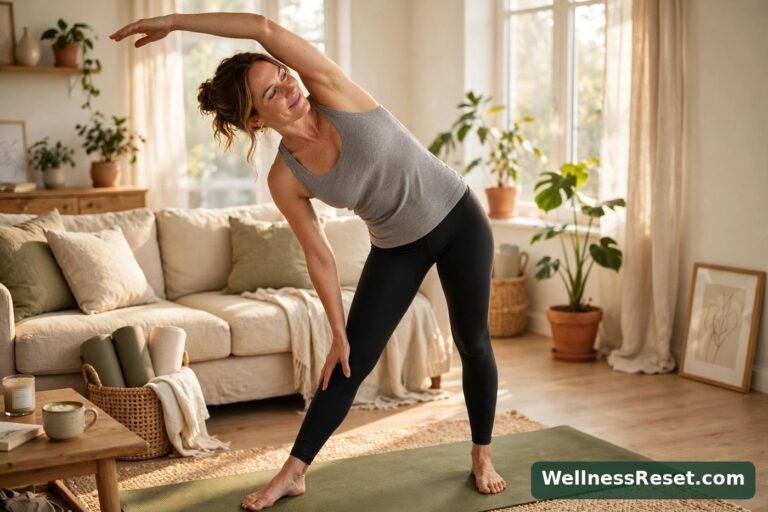
6. Seated side bends (5 each side). Sit on the edge of the bed, feet flat on the floor. One arm overhead, lean gently to the opposite side. Keep both sit-bones on the mattress — no lifting. Best for: the “I slept funny” neck-to-hip pull.

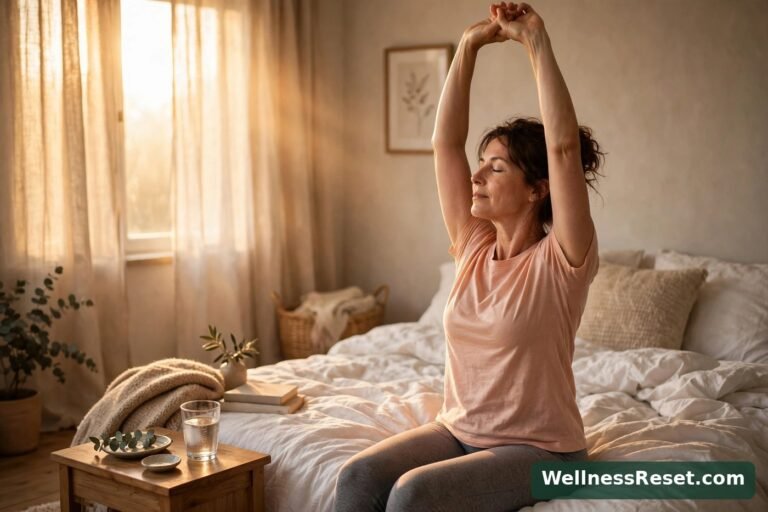
7. Standing tall stretch (30 seconds). Now stand — feet hip-width, hold the bedside or a chair if you like. Interlace fingers, push palms to the ceiling, and take three deep breaths. Stand as tall as you can. This is your “on” switch.
If you want a general version of this routine for any age, read our bed-stretches article. And once these feel easy, the next step up is Chair Yoga for Seniors.
A practical troubleshooting table
| Problem | Quick fix |
|---|---|
| Knees crack or click during knee rocks | Reduce the range — smaller movement, more reps. Clicking without pain is usually harmless, but mention it at your next checkup. |
| Can’t reach your knee for knee-to-chest | Use a belt or towel looped behind the thigh. No shame in props — physios prescribe them. |
| Figure-4 hurts the knee | Stop. Do knee-to-chest only, and ask your doctor about the knee before retrying. Hip stretch should never load the knee joint. |
| Dizzy when sitting up | Sit on the bed edge for 30 seconds before standing. Do moves 1–5 lying down first — the blood pressure shift is gentler that way. |
| Mattress too soft for support | Do moves 6–7 sitting on a firm chair beside the bed instead. |

Common mistakes
Rushing. Five unhurried minutes beats ten rushed ones. The point is waking the joints up, not finishing a checklist.
Holding your breath. If you’re straining enough to hold your breath, you’re stretching too hard. Back off until you can breathe normally.
Skipping the warm joints. Doing the big stretches (figure-4, chest opener) before the small ones (ankles, knees) is like sprinting before jogging. Order matters.
Doing it once and judging. The first morning feels awkward. The fifth feels automatic. Give it a week before deciding.
Final words
You already spend 7–8 hours in bed. Adding 5 minutes in the bed — before the day starts making demands — is the lowest-friction health habit I know. No equipment, no getting up, no excuses about the weather. Just you, the blanket, and joints that remember how to move.
FAQ
I’m over 70. Is this safe for me? These are gentle range-of-motion moves, not exercises. Still, if you have osteoporosis, a joint replacement, or a heart condition, run the list past your doctor once — five minutes of their time for a year of safe mornings.
Can I do this if I sleep on the couch or a recliner? Moves 1–5 work anywhere you can lie back. Moves 6–7 need a sitting edge — a sturdy chair works fine.
What if I can’t get down to the floor? You never have to. Every move here is in bed or on its edge. That’s the whole point.
Morning or evening? Morning — that’s when stiffness is worst. But doing it twice costs nothing and evening movers report sleeping better.
How is this different from your bed-stretches article? That one is a general routine for anyone. This one is tuned for older joints: slower, smaller ranges, fall-safety built in, and prop options where seniors actually need them.