
The 5-Minute Morning Stretching Routine for People With No Time
“I don’t have time to stretch in the morning” is the most honest objection in fitness. Not laziness — math. Between the alarm, the kids, the commute, and everything else, a 20-minute routine genuinely does not fit. So most people do nothing, and their body collects the bill by 10 AM: stiff back, tight hips, neck already climbing toward the ears.
This routine is the compromise that actually works: five moves, one minute each, standing up, no equipment, no mat, no changing clothes. It hits the five areas that stiffen overnight — spine, hips, hamstrings, chest, neck — and it is over before your coffee finishes brewing.
The Rules of the 5 Minutes
- Do it before you sit down. The moment you sit — for breakfast, for the commute, at the desk — the window closes. Stretch first, then sit.
- One minute per move. Set a timer or just count slow breaths (about 8–10 breaths per minute). Do not optimize; just move.
- Gentle, not athletic. Morning tissue is cold and stiff. Everything here stays at 60% effort. The goal is “ahh,” not “ow.”
The 5 Moves
Minute 1 — Overhead Reach + Side Bends
Stand tall, feet hip-width apart. Interlace your fingers and press your palms to the ceiling, reaching as tall as you can — rise onto your toes if it feels good. Hold 3 breaths. Then keep the reach and lean to the right for 3 breaths, left for 3 breaths. This wakes up the entire side body and decompresses the spine after a night of curling. Best for: whole-body stiffness, “compressed” morning feeling.
Minute 2 — Standing Cat–Cow
Hands on your thighs, knees soft. Round your back like an angry cat — chin to chest, tailbone tucked. Then reverse: arch gently, chest forward, look slightly up. Flow between the two slowly, one full cycle per breath, for the whole minute. Your spine has barely moved for eight hours; this reminds every segment how. Best for: spinal stiffness, lower-back ache.
Minute 3 — Hip Circles + Standing Figure-Four
Place your hands on a wall or chair back for balance. Lift your right knee to hip height and draw 5 slow circles with the knee, then reverse. Switch legs. Then, still holding support: cross your right ankle over your left knee, sit back slightly like a mini-squat, and feel the deep hip stretch — 20 seconds each side. Hips do most of the complaining people blame on their backs. Best for: tight hips, glute stiffness.

Minute 4 — Doorway Chest Stretch + Shoulder Rolls
Stand in a doorway (or any doorframe). Forearms on the frame, elbows at shoulder height, lean gently through until your chest opens — 30 seconds. Then step out and roll your shoulders: 5 big slow backward rolls, 5 forward. The chest has been folded inward all night; this unfolds it before the desk folds it again. Best for: rounded shoulders, shallow morning breathing.
Minute 5 — Neck Release Sequence
Sit or stand tall. Drop your right ear to your right shoulder, hold 3 breaths. Left side, 3 breaths. Chin to chest, 3 breaths. Finish with 5 slow shoulder shrugs — lift on the inhale, drop with a sigh on the exhale. The neck is usually the last thing people stretch and the first thing that hurts by noon. End here and it will not. Best for: neck tension, tension headaches.

Making It Stick (The Real Challenge)
The routine is easy. Doing it daily is the hard part. Three things that actually work:
Anchor it to something you already do. “After I turn on the coffee maker, I stretch until it beeps.” The existing habit carries the new one.
Leave your spot ready. Clear a 2×2 foot space the night before. Removing setup friction matters more than motivation.
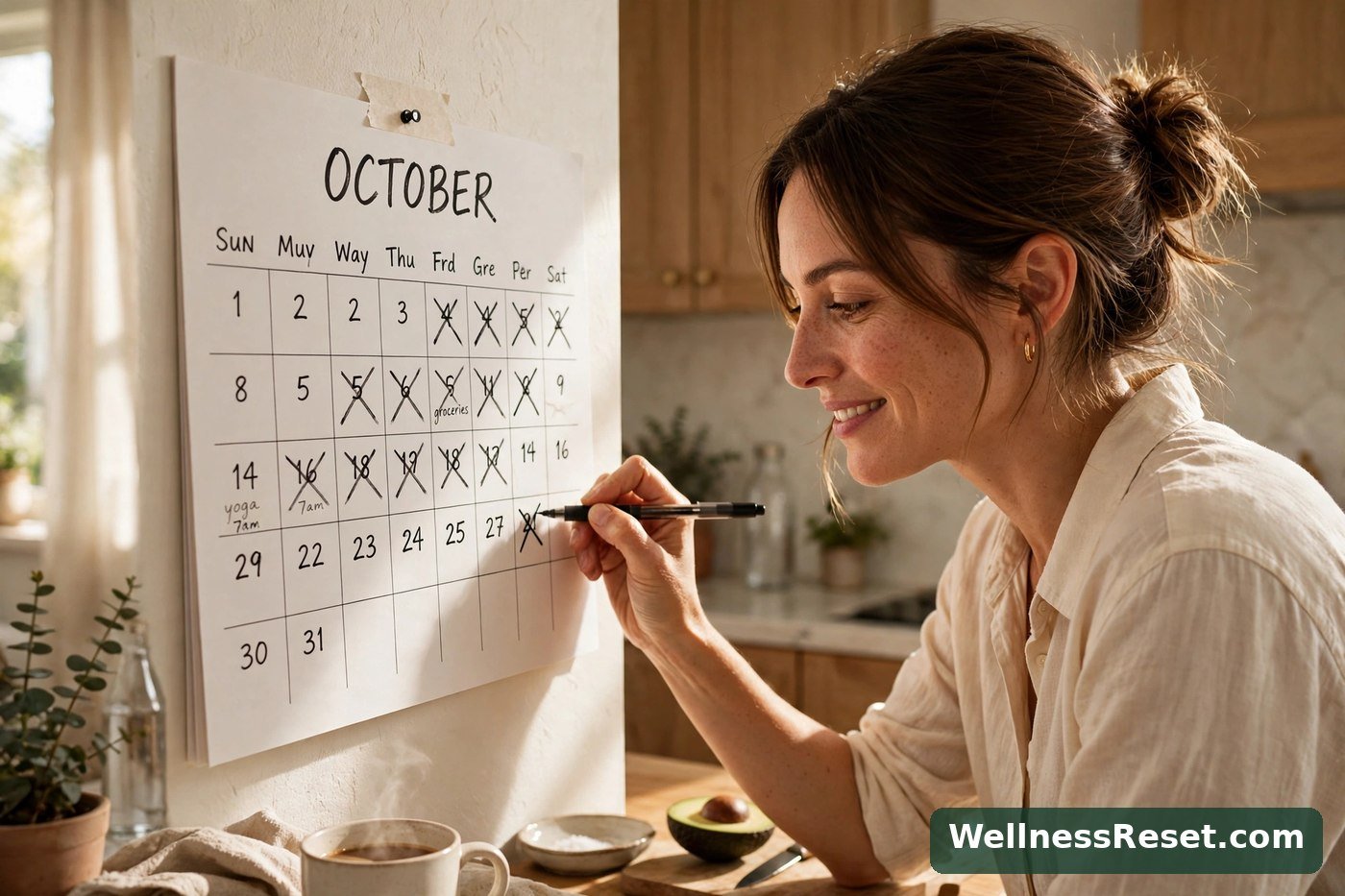
Track it stupidly simply. A wall calendar with an X each day. Do not break the chain — the visual streak does the motivating.
When 5 Minutes Is Not Enough
Some mornings you will finish and want more — great, that means it is working. On those days, add the 10-minute morning stretching routine right after. On lazy mornings, do this 5-minute version in bed instead with the morning stretches in bed sequence.
Problem → Quick Fix
| Problem | Quick fix |
|---|---|
| I keep forgetting to do it | Anchor it: coffee maker, bathroom door, kettle — pick one trigger and never skip the pairing |
| Balance is shaky on the hip moves | Always use wall/chair support — wobbling wastes the minute; support makes it effective |
| Hamstrings too tight for comfort | Everything here is bent-knee friendly — keep knees soft in every forward-leaning move |
| It feels too easy to matter | That is the point — easy gets done daily, and daily beats heroic-but-rare; add the 10-min routine when you want more |
| Kids/pets interrupt | Let them join — a 4-year-old doing hip circles is comedy and bonding, not an interruption |

Common Mistakes
Doing it after sitting for an hour. The routine’s power is timing — before the first long sit of the day. Done at 10 AM after two hours at a desk, it is just a nice stretch. Done at 7 AM before sitting, it changes the whole day.
Stretching cold muscles aggressively. Morning tissue needs gentle coaxing. If anything feels sharp, you are pushing too hard. Back to 60%.
Skipping the neck minute. Everyone skips minute 5 because the neck “feels fine” at 7 AM. It will not feel fine at 2 PM. Do the minute.
Final Words
Five minutes is almost insultingly short, which is exactly why this routine survives real life. It asks nothing — no equipment, no clothes change, no willpower reserve — and it pays back in the currency mornings actually need: a body that does not feel like it needs twenty minutes to become usable. Start tomorrow. Coffee maker on, stretch until it beeps.
FAQs
Is 5 minutes really enough to make a difference?
For undoing overnight stiffness, yes — the goal here is mobility maintenance, not fitness training. Five daily minutes beats a 30-minute routine you do twice a month. For building strength or flexibility, you need more; for starting the day right, this is enough.
Morning or evening — when is stretching better?
Both have value, but morning stretching specifically targets overnight stiffness, which is this routine’s job. Evening stretching targets accumulated daytime tension. If you only pick one, pick the one matching your problem.
Can I do this every day?
Yes — gentle mobility work is safe daily, unlike intense strength training. Your body recovers from this within hours.
What if I have an injury?
Skip any move that causes sharp pain and do the rest. For back, neck, or joint injuries, check with a physiotherapist before starting any routine — including gentle ones.
Do I need to warm up first?
The first two moves (reach, cat–cow) ARE the warm-up — they are deliberately the gentlest. Do not skip straight to minute 3.