Chair Yoga for Seniors: A Safe 15-Minute Routine to Start at Home
At 67, my neighbour refused to try yoga for one simple reason: “If I get down on that mat, who is getting me back up?” Fair question. Her knees hurt, her balance is not what it was, and every yoga photo she has ever seen shows a 25-year-old folded like a paperclip.
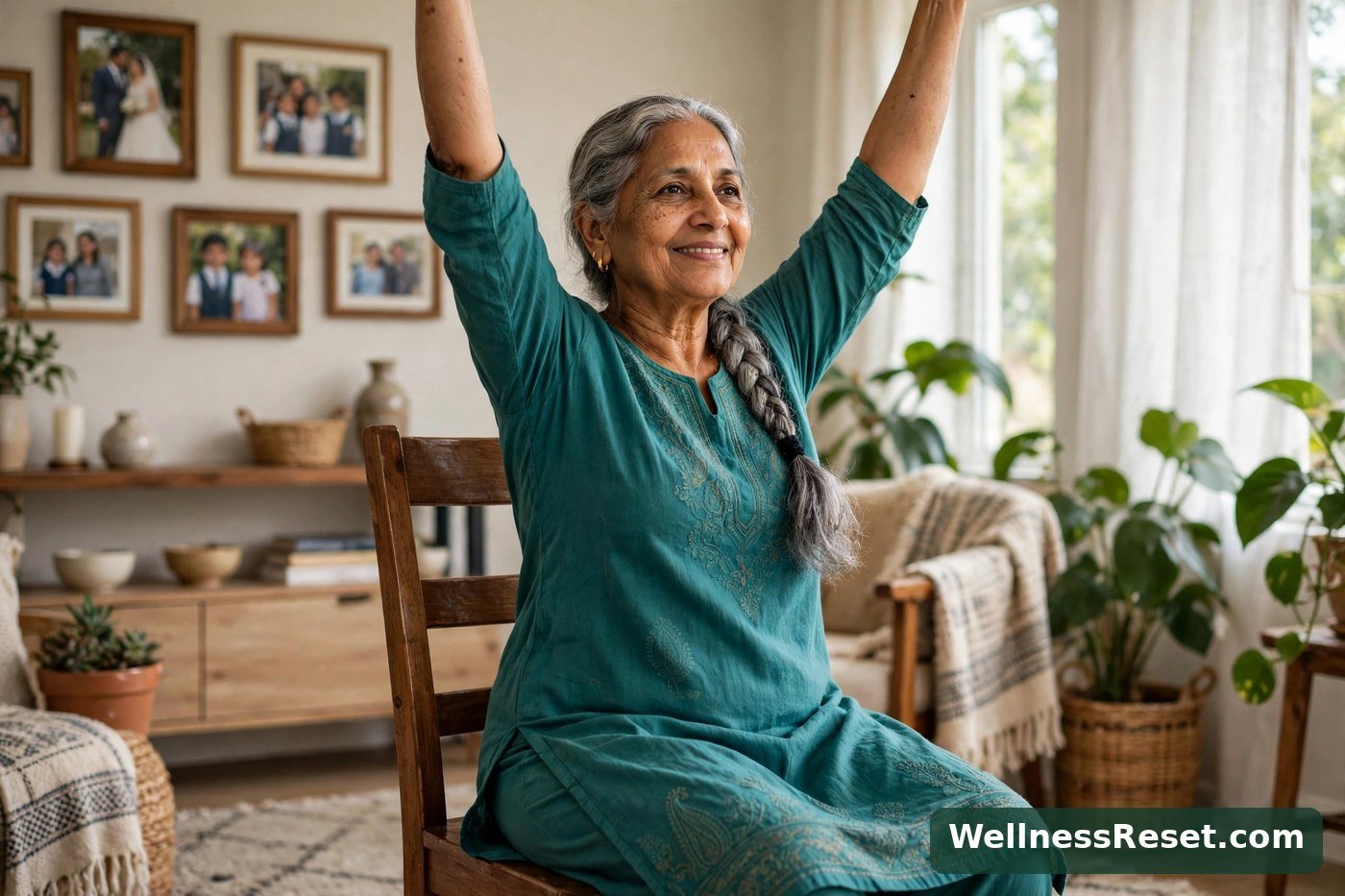
Chair yoga exists for exactly her. Everything happens sitting down or holding the chair — no floor, no balance acts, no getting up and down ten times. And it is not a watered-down version of “real” yoga: the stretches are the same stretches, the breathing is the same breathing. Only the chair is new, and the chair is the reason people over 60 actually stick with it.
This is a complete 15-minute routine you can start today, at home, in normal clothes. Before it: two honest notes. If you have had a recent surgery, a joint replacement, uncontrolled blood pressure, or you get dizzy often, check with your doctor before starting any new exercise — including this gentle one. And nothing here should hurt. A stretch pulling gently is the goal; pain is a stop sign, not a challenge.
Why a Chair Changes Everything After 60
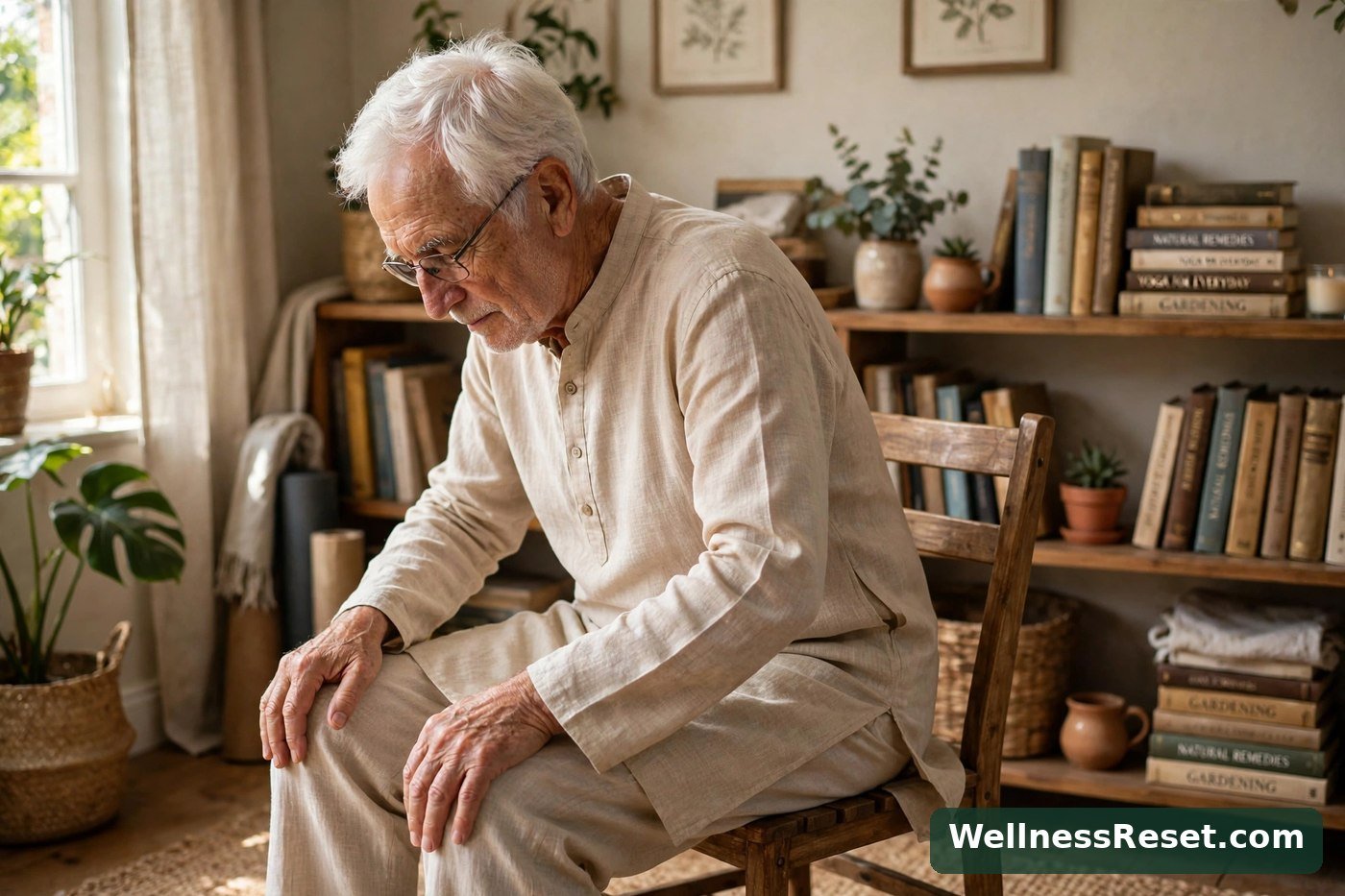
The three things that push older adults away from exercise are balance, joints, and the floor. A sturdy chair quietly solves all three. Sitting removes the fall risk from stretching. The seat supports your weight so stiff knees and hips are not loaded while they move. And starting and finishing in a chair you already trust means the whole session feels safe — which is why chair yoga classes for seniors have spread through community centres and clinics: people come back, week after week, because nothing about it scares them.
What do you get for coming back? The honest list: joints that move through their full range more easily, a back and neck that complain less, steadier circulation in the legs, and calmer breathing. Not miracles — maintenance. At 60-plus, maintenance is the whole game, and it is a game worth winning. If you are younger and completely new, our beginner chair yoga routine is the gentler on-ramp; this one is paced and built specifically for older bodies.
Setting Up Safely (2 Minutes That Matter)
The chair: sturdy, no wheels, no arms if possible (arms block twists and side bends), with a backrest. Dining chairs are usually perfect. It should not slide — put it against a wall or on a mat or carpet if your floor is slippery.
Your position: sit toward the front half of the seat, both feet flat on the floor, about hip-width apart. Shoes with a grip or bare feet — socks on a smooth floor are a slip waiting to happen.
The rules: breathe normally throughout, never hold your breath during a stretch. Move at half the speed you think you need. Keep a glass of water nearby, and stop and sit quietly if you feel dizzy at any point.
The 15-Minute Routine
1. Settle and Breathe (2 minutes)
Sit tall, hands on thighs. Breathe in slowly through the nose for a count of 4, out for a count of 4. Six to eight breaths. With each exhale, let your shoulders drop. This is not a warm-up formality — slow breathing is what tells stiff muscles it is safe to let go.
2. Neck Release (1.5 minutes)
Right ear toward right shoulder, hold for three breaths; left side, three breaths. Then slow half-circles with the chin, like drawing a smile on your chest. Never roll the neck in full fast circles. Best for: neck stiffness, morning headaches.
3. Shoulder Rolls and Chest Opener (2 minutes)
Five slow shoulder rolls backward, five forward. Then clasp your hands behind the chair’s backrest (or hold a small towel between them if they do not meet), open your chest wide, and breathe into it for four breaths. Shoulders that have rounded forward over decades will not fix in a day — but they soften, session by session.
4. Seated Cat–Cow (2 minutes)
Hands on knees. Breathe in: arch gently, chest forward. Breathe out: round your back, chin down. Eight to ten slow rounds. This one movement oils the whole spine. Best for: back stiffness, posture.
5. Seated Spinal Twist (2 minutes)
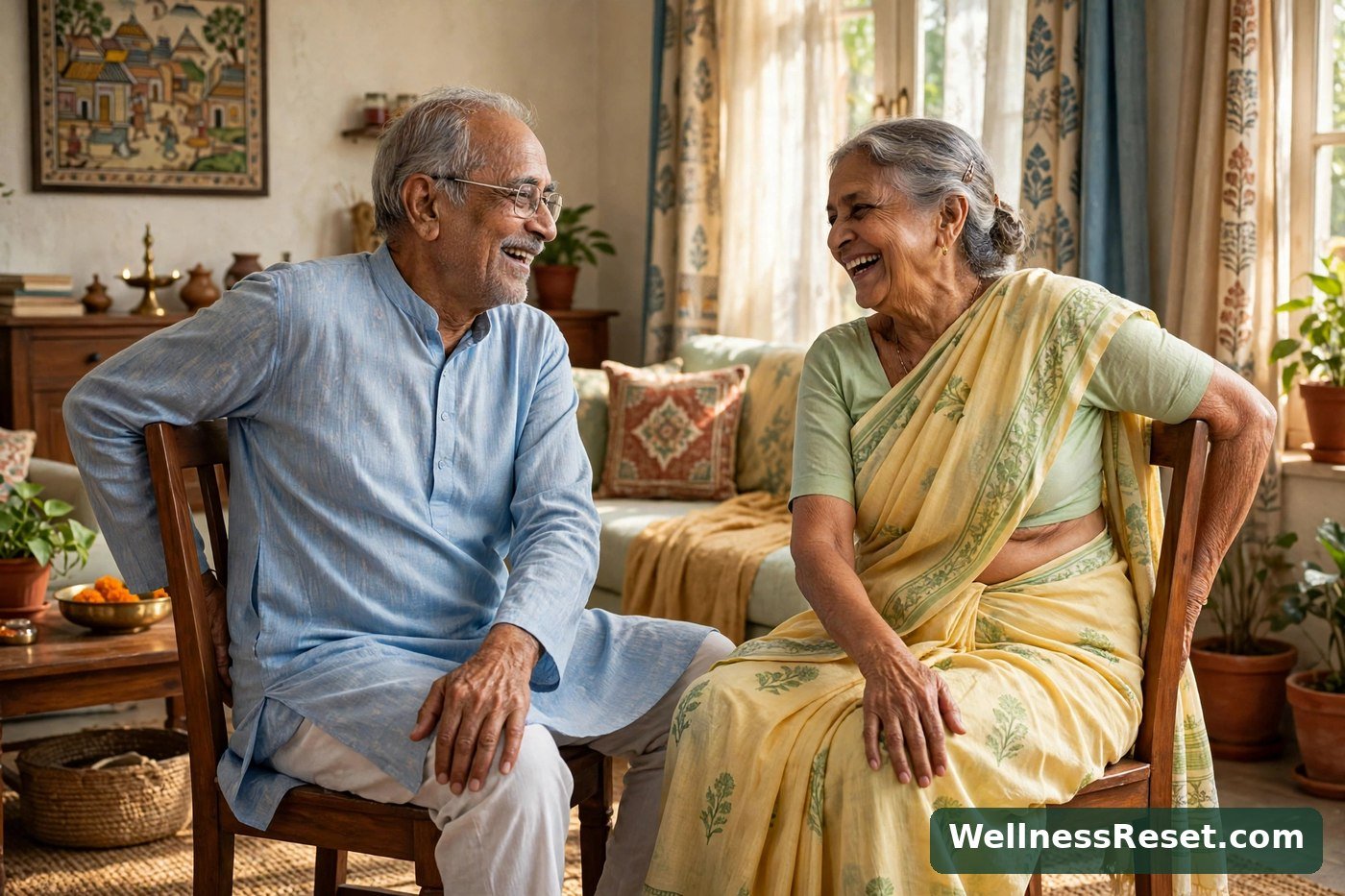
Right hand on left knee, left hand on the seat behind you. Grow tall on the inhale, twist gently on the exhale. Four breaths, centre, other side. Both feet stay flat and both hips stay on the chair. Best for: the locked feeling in the middle of the back.
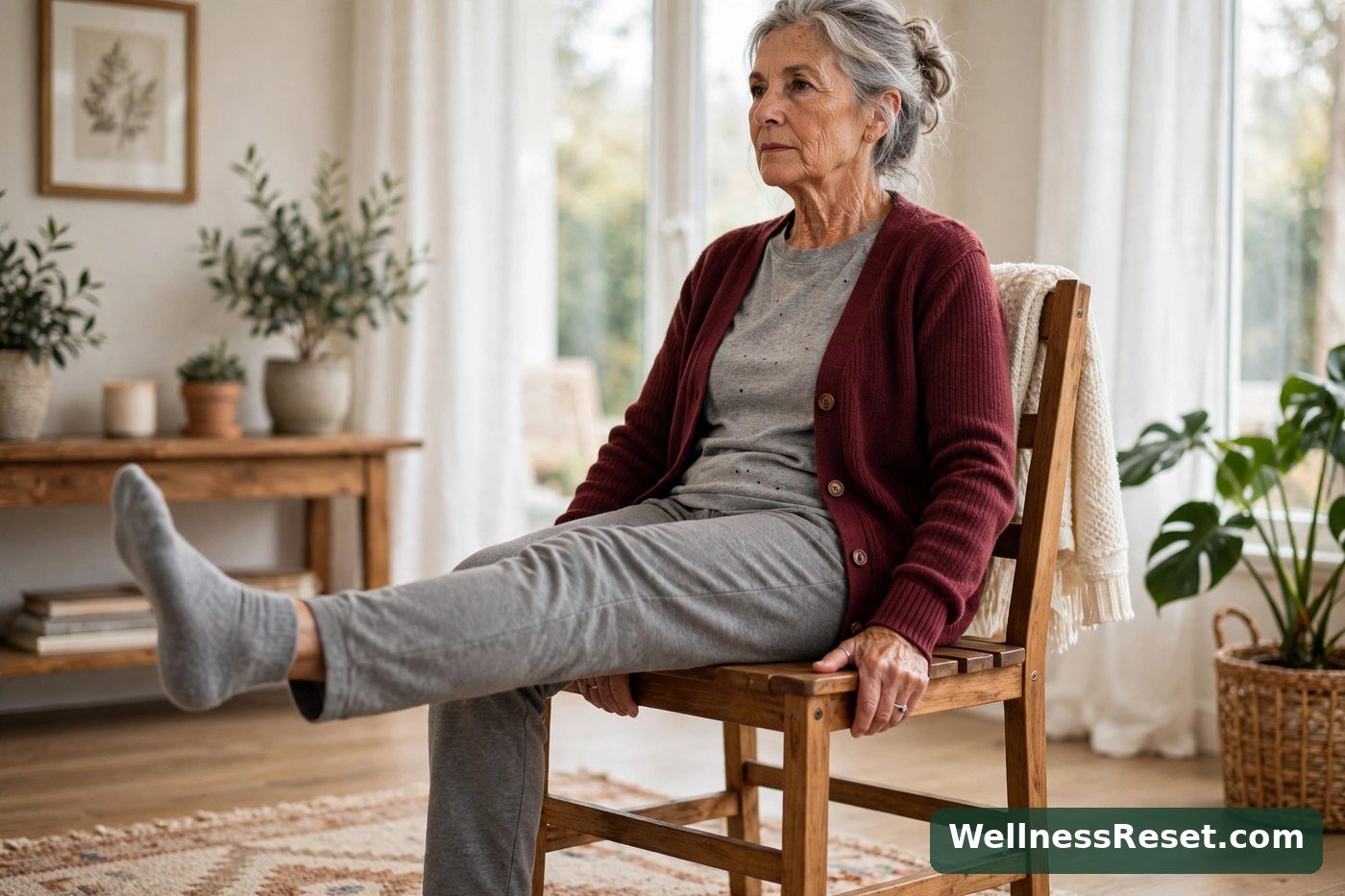
6. Seated Leg Extensions (2 minutes)
Hold the sides of the seat. Straighten your right leg out in front, foot flexed, hold 3 seconds, lower slowly. Eight times, then the left leg. This is quiet strength work for the thighs — the muscles that get you out of chairs, up stairs, and through the day. Best for: leg strength, knee support.
7. Ankles and Heels (2 minutes)
Circle each ankle five times each way. Then, feet flat, lift both heels high, hold 2 seconds, lower; ten times. Finish with toe lifts, heels down. Legs that sit all day need this circulation pump, and strong ankles are fall prevention in disguise. Best for: circulation, ankle stiffness, balance support.
8. Forward Fold and Finish (1.5 minutes)
Feet a little wider. Fold forward from the hips, hands sliding down your legs only as far as comfortable, head hanging loose. Four slow breaths, roll up slowly, sit tall, and take three final deep breaths with your hands resting on your thighs. Done — notice how sitting itself feels different now.

Quick Fixes for Common Situations
| Problem | Quick fix |
|---|---|
| Arthritic hands hurt gripping the chair | Rest open palms on your thighs instead of gripping; use a towel over the seat edge for padding |
| I feel unsteady even sitting | Use a chair with arms for this routine and keep both feet flat the whole time; skip the fold |
| 15 minutes feels too long at first | Do moves 1, 4, 5 and 8 — about 7 minutes — and build up over two weeks |
| I get dizzy when I bend forward | Fold only a few inches, keep your head above your heart, and skip the fold entirely on dizzy days |
| My knees hurt in leg extensions | Straighten only partway — strength builds at any angle you can manage without pain |
Mistakes Well-Meaning Beginners Make
The biggest one is treating gentle like it does not count, then pushing too hard to “make it real exercise” — jerking into stretches, holding breath, chasing a bigger range. In a body with sixty-plus years of history, that is how a good habit ends in a sore week and a quiet goodbye.
The second is the all-or-nothing trap: a full routine on Monday, nothing for nine days, guilt by Friday. Three honest sessions a week of this routine will do more for your joints than any heroic single session. Put it after something you already do — morning tea, the news, your walk — and let the existing habit carry the new one. A slow breathing practice pairs naturally with it too; calm is a skill that transfers.
And the third: skipping the setup. Wrong chair, socks on tiles, feet dangling — small things that turn a safe routine into a wobbly one. Two minutes of setup is part of the yoga.
Final Words
You do not need to get down on the floor to take care of your body, and you never did. You need a decent chair, fifteen unhurried minutes, and the willingness to start where you actually are — stiff knees, careful balance and all. Do this routine three mornings this week and pay attention to the small things: how the stairs feel, how your neck is at dinner, how you sleep. That is how this practice proves itself — quietly, in ordinary moments, within a couple of weeks.
FAQs
How many times a week should seniors do chair yoga?
Three sessions a week is a strong, realistic target. The routine is gentle enough for alternate days; daily is fine too if you keep the effort easy and skip anything that feels strained.
Is chair yoga safe with arthritis or a joint replacement?
Chair yoga is widely used with arthritis because the chair unloads the joints, but a joint replacement or a recent surgery changes the rules — some movements may be restricted for you. Show this routine to your doctor or physiotherapist once before starting; that one check makes the whole practice worry-free.
Do I need any special clothes or equipment?
No. A sturdy armless chair, comfortable everyday clothes, and shoes with grip (or bare feet on a non-slip surface) are the entire kit.
Chair yoga or regular yoga — which is better at my age?
The better one is the one you will still be doing in three months. If floor work, kneeling, or balance worries you, chair yoga removes those barriers while keeping most of the benefit. Many people start in the chair and add standing support poses later, holding the chair back.





4 Comments