
How to Fall Asleep Fast: 9 Things That Actually Work (and 3 That Don’t)
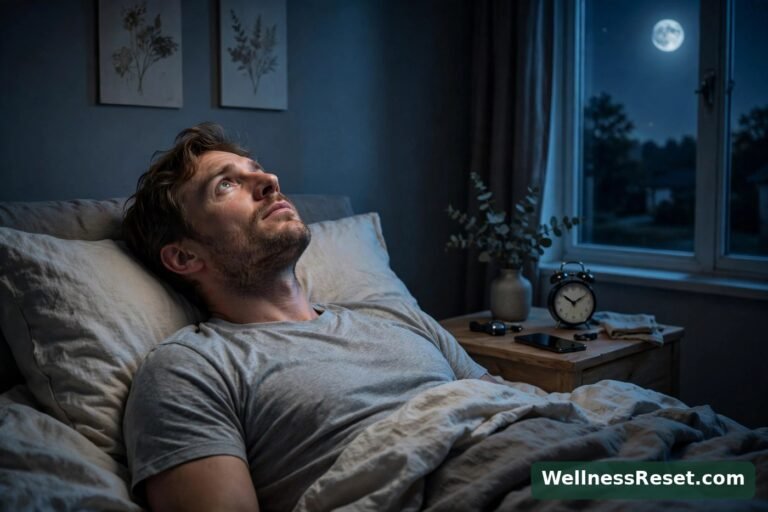
1:40 am. You have done the maths four times now: if you fall asleep right now, you get five hours and twenty minutes. If you fall asleep right now. The maths is not helping. The ceiling is not helping. And the harder you try to sleep, the wider awake you feel — which, it turns out, is not a personal failure. It is how sleep works. Sleep is one of the few things in life that runs away when you chase it.
So this article is not “try harder” advice. It is the nine things that reliably make sleep arrive faster, most of them working by removing what’s blocking it rather than knocking you out. Some are for tonight, in the next twenty minutes. A few are for tomorrow, so tonight stops happening.
One boundary before we start: if you regularly take more than half an hour to fall asleep, wake unrefreshed for months, snore heavily, or stop breathing in your sleep (a partner usually notices), that deserves a doctor or sleep specialist — not a listicle. Everything below is for the common, miserable, racing-mind kind of sleeplessness.

Why You Can’t Fall Asleep (It’s Usually One of Three Things)
Your body is not sleepy yet. Sleep pressure builds the longer you are awake and active. A late lie-in, a long afternoon nap, or a day spent mostly sitting can leave you in bed at 11 pm with a body that has simply not earned sleep yet.
Your mind won’t stand down. The moment the lights go off, the brain helpfully replays the day and pre-plays tomorrow. A racing mind is the single most common reason healthy people lie awake.
Your body is warm, lit up, or wired. Core temperature needs to drop for sleep to start. A hot room, a bright screen an hour before bed, and a 6 pm coffee (caffeine’s half-life is around 5–6 hours) all push in the wrong direction.
The nine fixes below map onto these three causes. Use the ones that match yours.
Tonight: 5 Things That Help Within the Hour
1. Cool the room down (works tonight)
Open a window, drop the AC a couple of degrees, lose a blanket layer. A slightly cool room — most people sleep best somewhere around 18–20°C — lets your core temperature fall, which is the actual on-switch for sleepiness. A warm (not hot) shower an hour before bed speeds this up: you heat up, then cool down faster, and the drop is the signal.
2. Empty your head onto paper (works tonight)
Five minutes, notebook on the bedside table, before lights out. Write tomorrow’s tasks, the thing you are worried you’ll forget, the argument you are rehearsing — all of it, messily. Studies on this “worry journal” trick found people fell asleep noticeably faster, and the reason is simple: the brain keeps rehearsing what it fears you’ll forget. Paper remembers, so the brain can stop.
3. Give your mind a boring job (works tonight)
When the thoughts start looping in the dark, use the cognitive shuffle: pick a random letter, and slowly name objects that start with it — B… banana, bridge, button — picturing each one briefly, no story, no effort. It mimics the random drifting images of early sleep and starves the worry loop of attention. Counting sheep fails because it is too easy to think over; this is just absorbing enough.

4. Breathe out longer than you breathe in (works tonight)
Slow breathing with a long exhale — in for 4, out for 6 — for three or four minutes. The extended exhale is the part of breathing that pushes the nervous system toward sleep mode. Our box breathing guide covers the full technique family, including the sleep variation.
5. If you’re still awake after ~20 minutes, get up (works tonight)
The hardest rule, and the one sleep therapists insist on: lying in bed awake trains your brain that bed = frustrated wakefulness. If roughly twenty minutes pass (estimate it — do not check the clock; clock-watching is its own problem), get up, go somewhere dim, read something dull, and return only when your eyelids get heavy. It feels wrong for two nights and right by the fourth.
Tomorrow: 4 Habits That Fix the Root
6. Wake up at the same time every day
Yes, weekends too, within about half an hour. A fixed wake time anchors your body clock, and sleepiness at night starts arriving on schedule. This single habit is the foundation of any real reset — it is step one of our 7-night sleep schedule fix for a reason.
7. Get daylight in your eyes within an hour of waking
Ten minutes outside (longer if it is cloudy) before the phone and the news. Morning light sets the clock that decides when melatonin rises at night. People who fix only this one thing often report sleepiness arriving an hour earlier within a week.

8. Move caffeine to the morning, alcohol out of the night
Caffeine after about 2 pm is still half-active at 8 pm. And the nightcap is a con: alcohol makes you fall asleep faster but fragments the second half of the night, which is why a drink before bed so often ends in a 3 am staring contest.
9. Park the phone outside the bedroom
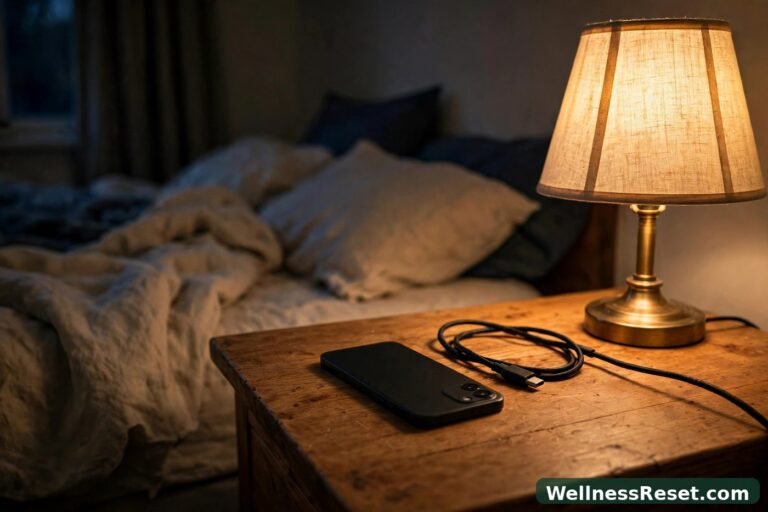
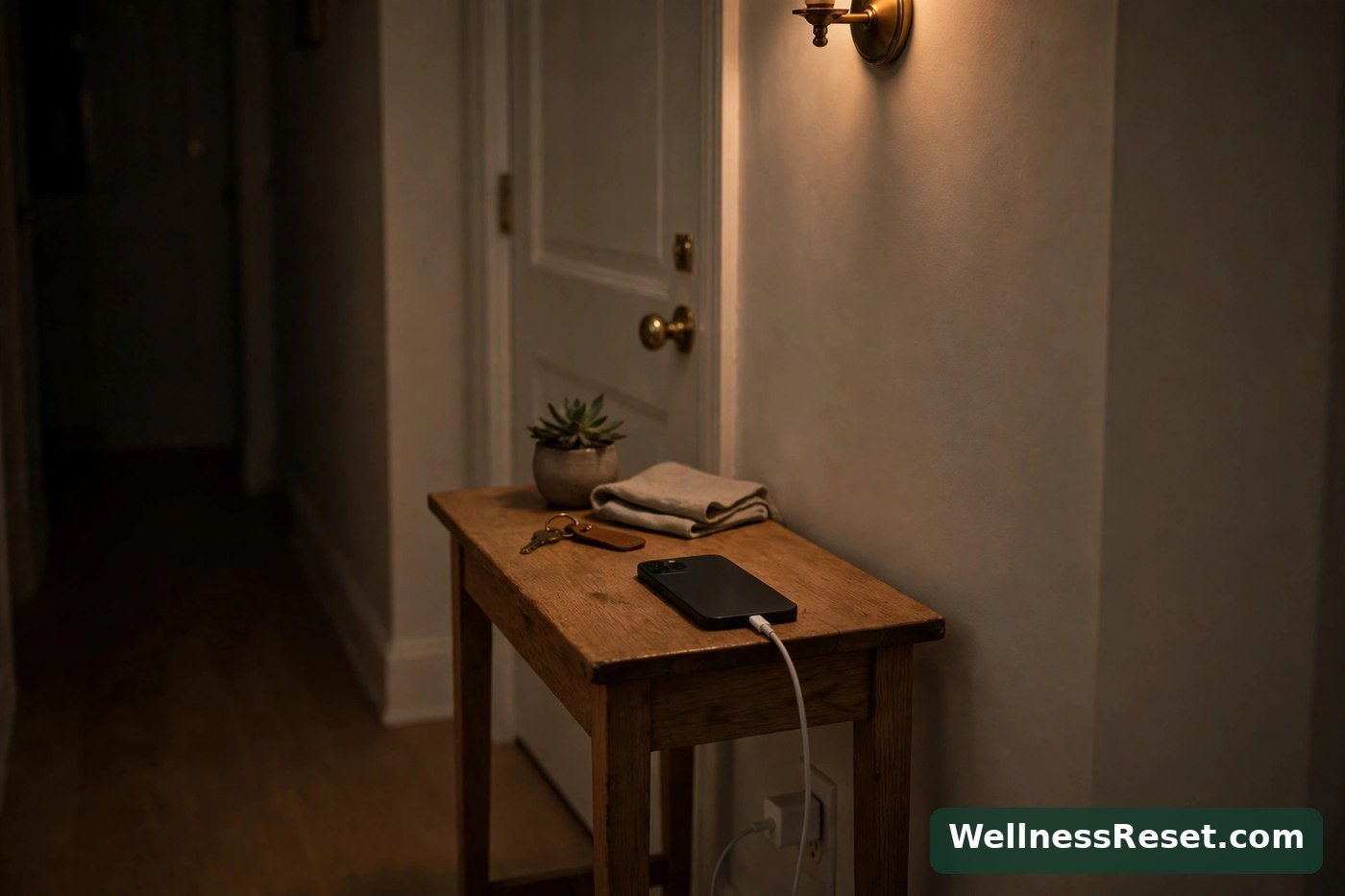
Not face-down. Not on silent across the room — outside, charging. The scroll is engineered to keep your brain in daytime mode, and “I’ll just check one thing” at 11:40 is how midnight happens. An alarm clock costs less than the sleep you are losing.
The 3 That Don’t Work (Stop Wasting Nights on Them)
Forcing it. “Sleep, sleep, SLEEP” is performance pressure, and pressure is wakefulness. Everything above works by making sleep likely, then getting out of its way.
Scrolling to get sleepy. Bright light, new information, small emotional jolts — the exact chemical opposite of falling asleep. This is not a grey area anymore.
A heavy late meal. A full stomach digesting at midnight raises body temperature and brings reflux into the bed with you. Light snack if you are hungry; feast earlier.
Quick Guide: Match the Fix to the Night
| Your problem tonight | Start with |
|---|---|
| Mind racing with tomorrow’s tasks | Brain dump (fix 2), then cognitive shuffle (fix 3) |
| Wide awake, body not tired | Get-up rule (fix 5) tonight; wake time + morning light (6, 7) tomorrow |
| Too hot and restless | Cool room + warm shower trick (fix 1) |
| Slept fine, then woke at 3 am and can’t drop off | Long-exhale breathing (fix 4); get up if it stretches past ~20 minutes |
| Every night is like this for months | The full 4 habits for two weeks — and a doctor if nothing moves |
Final Words
Falling asleep fast is mostly not a talent some people have — it is what happens when temperature, timing, light and a quiet mind line up at the same hour. Pick the two fixes tonight that match your actual problem, and the two habits tomorrow that stop the problem from rebuilding itself. Most people feel the first change inside a week. And if the week brings nothing, that is information too — take it to a doctor, because sleep that broken deserves more than tips.
FAQs
What about melatonin? Will it make me fall asleep faster?
Melatonin is a timing signal, not a sleeping pill — it tells your body when night is, and it helps most with jet lag and shifted schedules rather than a racing mind. Doses and timing vary a lot by person, so treat it as a conversation with your doctor, not a first resort. Fix light, wake time and caffeine first; those are the levers melatonin is only imitating.
How long should it normally take to fall asleep?
Around 10–20 minutes is typical for a healthy sleeper. Regularly under 5 minutes usually means you are sleep-deprived; regularly over 30, a few nights a week, is worth working on — with the habits above first.
Does exercise help me fall asleep faster?
Yes, generally — people who move regularly fall asleep faster and sleep deeper. Timing matters: finish vigorous exercise at least 2–3 hours before bed, because a raised body temperature and adrenaline work against you. Gentle stretching in the evening is fine right up to bedtime.
Is it bad to nap if I slept badly?
A short nap (20–30 minutes) before about 3 pm is fine and can rescue a rough day. Long or late naps spend the sleep pressure you need at night — the most common hidden cause of “I just can’t fall asleep.”