The 30-Minute Digital Sunset for Better Sleep
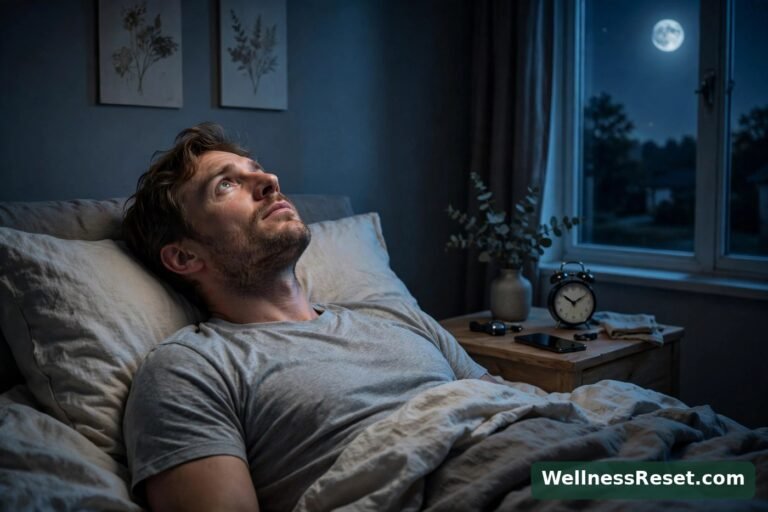
Here’s a number that changed how I think about bedtime: the average person checks their phone 96 times a day — once every 10 minutes. And the last check is almost always in bed, 20 minutes past when they meant to sleep.
The screen isn’t just “stimulating.” It’s a slot machine engineered to keep you scrolling, sitting 12 inches from your face, at the exact hour your brain needs to wind down. No amount of “sleep hygiene tips” survives the algorithm. So instead of fighting the phone, this routine removes it — 30 minutes before bed, every night. I call it the digital sunset.
What 30 screen-free minutes actually do
Your eyes stop fighting. Screens are bright light sources held close to your face. Dimming the room lets your body’s evening chemistry do its job — you don’t need the science lecture, you just need the lamp low.
Your brain gets bored. Boredom is the point. A brain fed on infinite scroll can’t switch to sleep mode; a brain with nothing to chew on starts getting drowsy. That restlessness you feel in the first 5 minutes? That’s the withdrawal. It passes.
Tomorrow’s worries lose their fuel. Most late-night anxiety is just tomorrow’s to-do list looping. The sunset routine ends with a 2-minute “brain dump” that closes those loops.

The 30-minute routine, step by step
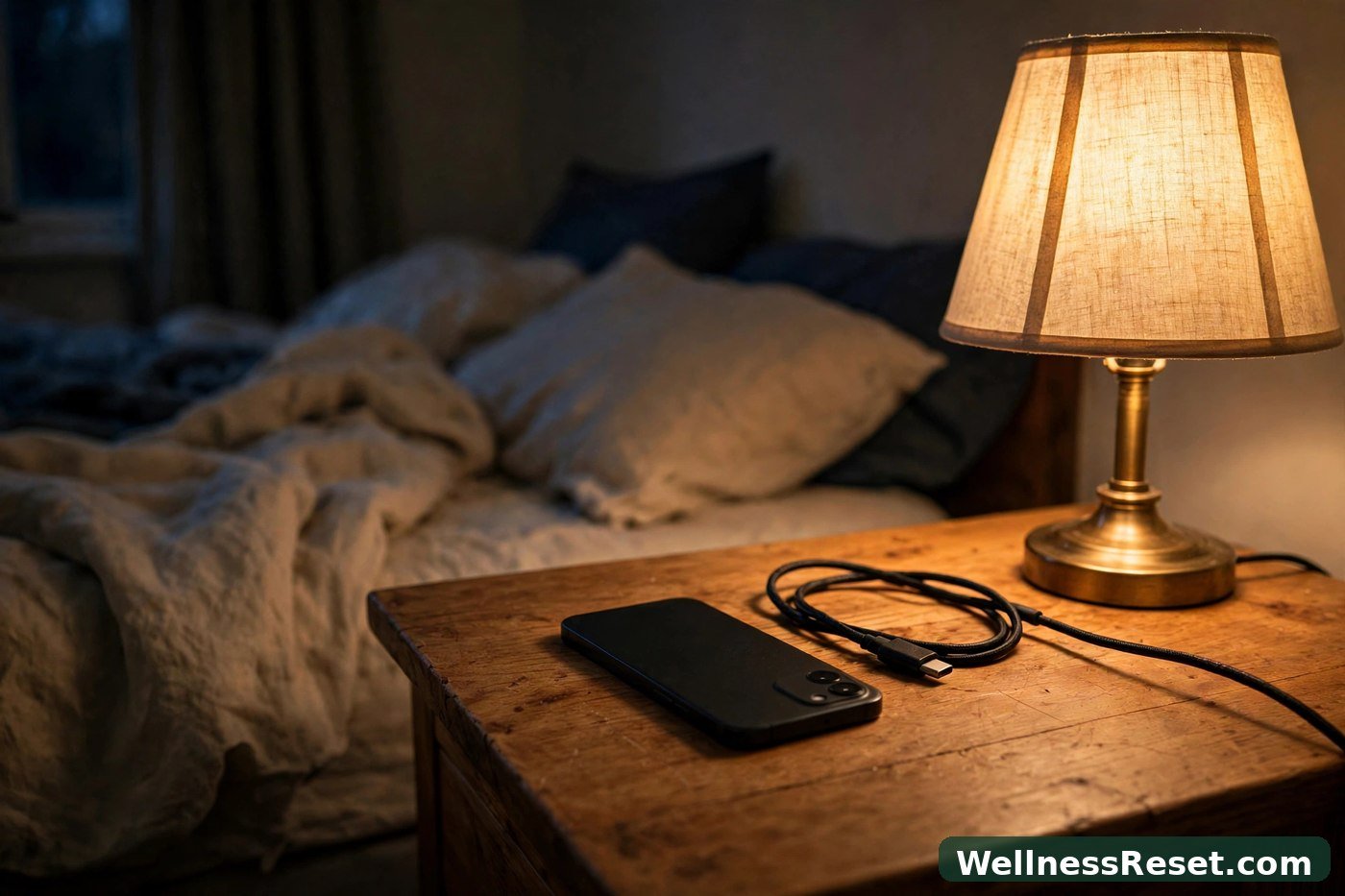
Minute 0–2: The shutdown ritual. Plug the phone in — outside the bedroom if possible, across the room if not. Face down. Tell yourself out loud: “I’m done for today.” Sounds silly. Works anyway.
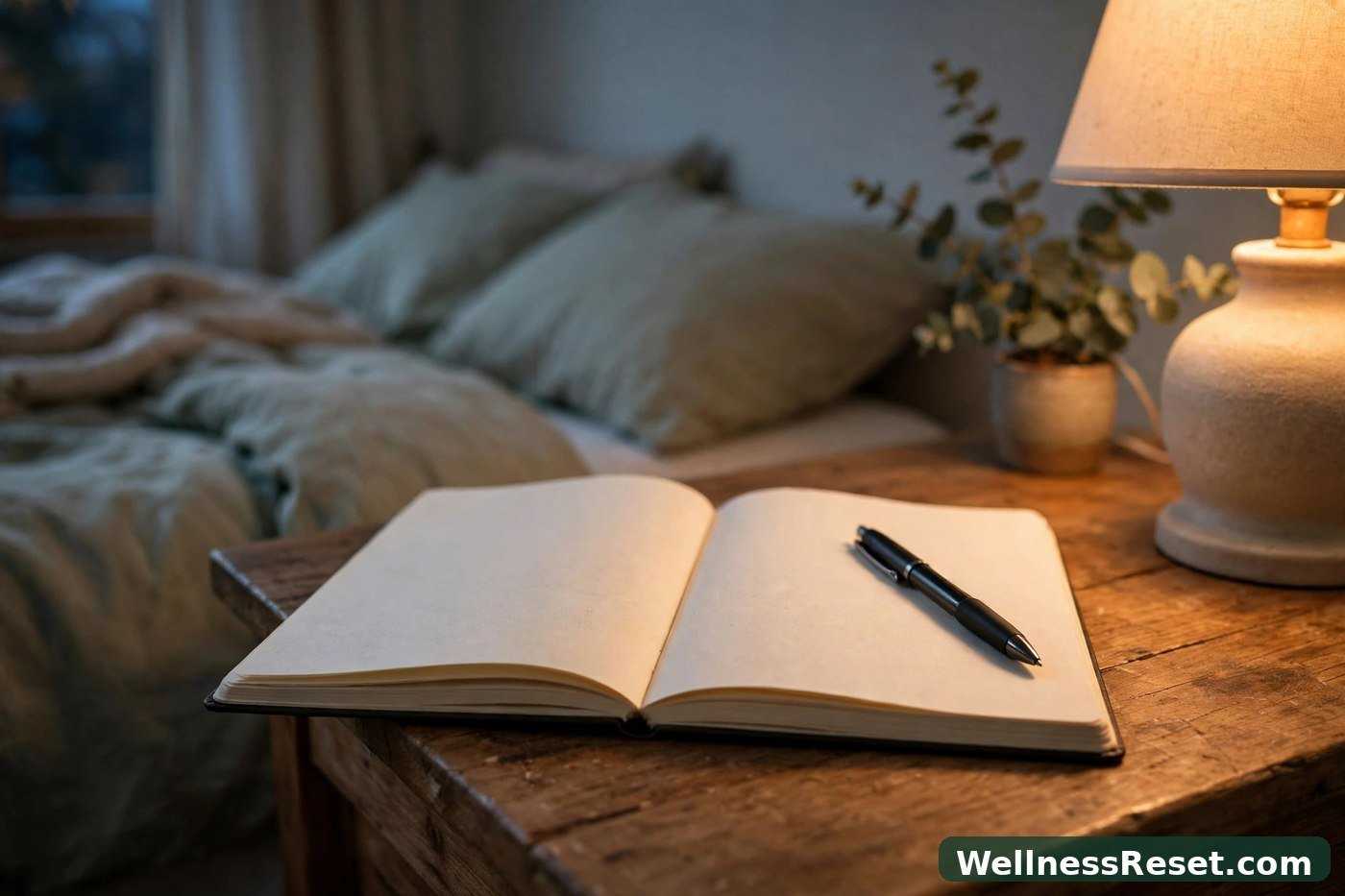
Minute 2–10: Dim and tidy. Turn off the overhead light. One lamp. Spend 8 minutes doing a tiny reset: clear the nightstand, lay out tomorrow’s clothes, put the kettle on for morning. This isn’t chores — it’s telling your nervous system the day is closing.
Minute 10–20: The boring middle. This is the part with no screen. Options that actually work:
- Read a physical book or magazine (not a thriller that keeps you up till 2)
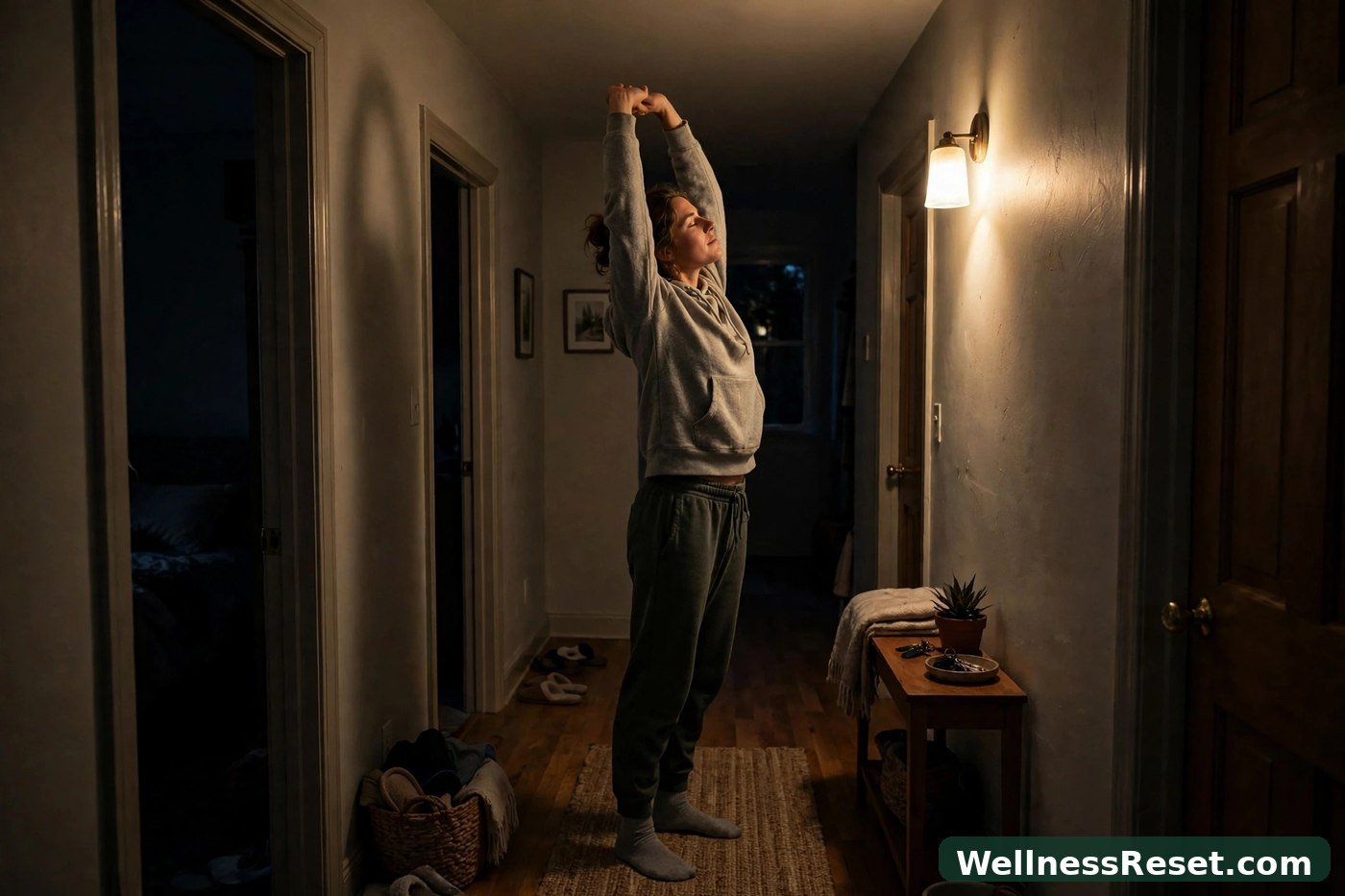
- Gentle stretching — the seated forward fold or lying knee rocks from our other routines
- A warm shower or washing your face slowly
- Listen to calm music or a sleep story — audio only, phone face-down
Minute 20–28: The brain dump. Notebook and pen. Write tomorrow’s top 3 tasks and anything looping in your head. Two rules: no editing, no solving. You’re parking the thoughts, not processing them. People who do this fall asleep faster — not because it’s magic, because the loop is closed.
Minute 28–30: The landing. Get into bed. Do the 4-7-8 breathing method — four rounds is enough. Lights out.
Troubleshooting the hard parts
| Problem | Quick fix |
|---|---|
| “I use my phone as my alarm” | Buy a ₹300 alarm clock. This single purchase removes the biggest excuse in the book. |
| Partner scrolls next to you in bed | Agree on a shared “phones down” time, or use an eye mask + earplugs. You can only control your side. |
| Work messages come late | Set an auto-reply or status: “Offline after 10 PM, will reply in the morning.” Most “urgent” night messages aren’t. |
| The first week feels awful | Normal. Your brain is recalibrating its dopamine baseline. Nights 1–4 are the worst; it eases by day 7. |
| I fall asleep fine but wake at 3 AM | That’s a different problem — see our guide on waking up at 3 AM. The sunset still helps, but add the 3 AM protocol. |
Mistakes that kill the routine
Replacing the phone with the TV. A 55-inch screen is not a wind-down. If TV is your thing, end it 30 minutes before bed too — the sunset covers all screens.
Doing it “most nights.” The benefit compounds. Five nights a week still beats zero, but the people who report real change do it nightly for at least two weeks.
Making it complicated. A 12-step evening routine is a hobby, not a habit. Thirty minutes, five steps, done.
Checking “just one message” at minute 15. There is no such thing. The algorithm wins every tie-break. Phone stays down.
Final words
You don’t need a digital detox retreat or a dumbphone. You need 30 boring minutes and a notebook. The sunset is the smallest change with the most disproportionate payoff in this whole sleep series — because it removes the one thing actively working against every other tip. For the full system behind it, read Sleep Hygiene: 10 Simple Rules.
Start tonight. Plug the phone in across the room. See what your brain does with the boredom.

FAQ
Is 30 minutes enough? An hour would be better, right? An hour is better in theory and worse in practice — most people won’t sustain it. Thirty minutes is the minimum effective dose people actually stick to.
What about e-readers? E-ink readers without backlight are fine. Backlit tablets are screens — same rules apply.
I work night shifts. Does this still apply? Yes — do the 30 minutes before your bedtime, whatever the clock says. The mechanism is about the wind-down, not the hour.
Can I listen to podcasts? Audio is fine — it’s the screen and the scroll that cause the damage. Keep the phone face-down and resist “just checking” the episode list.
How is this different from your sleep hygiene article? Sleep hygiene is the full system — room, schedule, caffeine, light. The digital sunset is one weapon from that system, expanded into a complete nightly protocol you can start tonight.