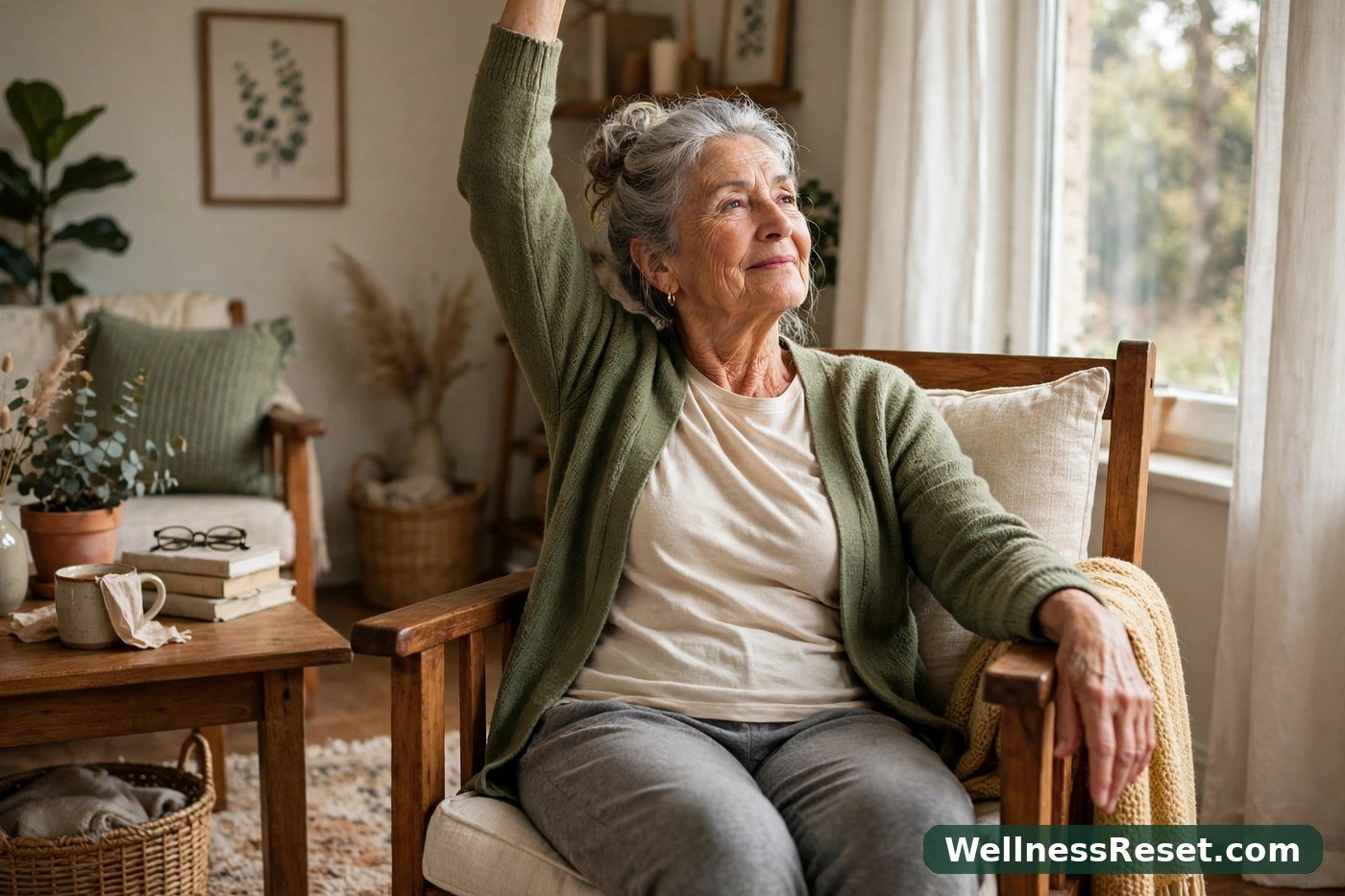
Gentle Chair Yoga for Arthritis
Last winter, my aunt called me at 7:15 in the morning. She had been awake since five, not because she wanted to be, but because her fingers felt like they had been wrapped in tight rubber bands overnight. She told me the worst part wasn’t the stiffness itself. It was the way it stole the first two hours of her day — the kettle, the newspaper, the walk to the gate — everything waited until her hands decided to cooperate.
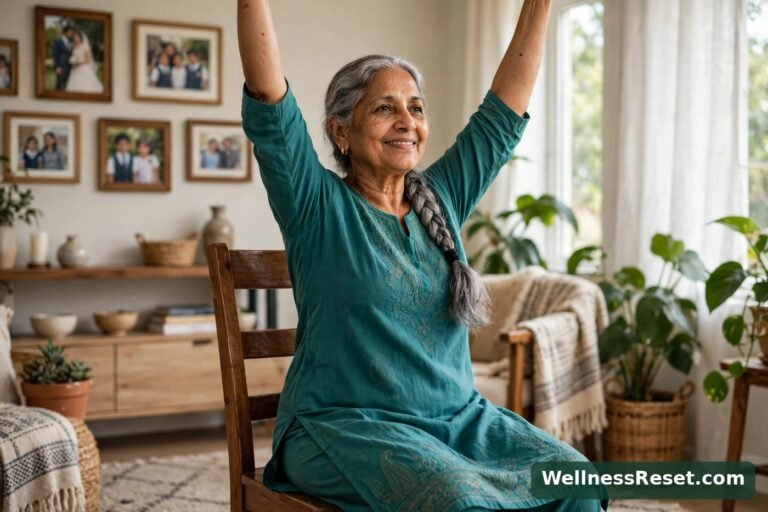
That is where gentle chair yoga for arthritis comes in. Not the bendy, floor-based kind. The seated kind. You stay in a sturdy chair, feet flat on the floor, and you move only as far as comfort allows. In my experience, this is the version that actually sticks, because it never asks your joints to do something they are not ready for.
Important first note: talk to your doctor before you start. This is general wellness information, not medical advice. It does not diagnose or treat anything. If a movement hurts, stop. Pain is not a sign that the exercise is working — it is a sign to back off.
Why Seated Movement Feels Different
Standing yoga asks a lot of your knees and hips before you have even begun. Floor work asks you to get down and back up again, which for many people is the hardest part of the whole thing.
A chair changes the deal. Your weight is supported. Your balance is not a worry. You can stop at any second and you are already resting. What works best is starting with the joints that bother you most in the morning — for most people, that is the hands, shoulders, and knees — and giving them small, slow movement before the day asks anything of them.
The Routine: 8 Gentle Moves
Do these in order, or pick the ones that fit your morning. Sit tall but not stiff, feet flat, and keep both hands free. Each move is 30 seconds to a minute unless noted.
1. Seated Shoulder Rolls
Roll both shoulders up, back, and down in a slow circle. Five rolls, then reverse for five more.
Best for: stiff shoulders that complain when you reach for a high shelf.
Keep the movement small. If a full circle pinches, make a half-circle instead. Your shoulders should feel looser after, not tired.
2. Finger Fans and Fists
Spread your fingers wide, hold for three seconds, then close into a soft fist. Repeat eight times.
Best for: morning hand stiffness, buttoning a shirt, holding a cup.
Do not squeeze hard. The fist should be gentle, like you are holding a soft ball of cotton. If your knuckles protest, skip the fist and just do the spreading.
3. Wrist Circles
Rest your forearms lightly on your thighs and circle your wrists slowly — five one way, five the other.
Best for: wrists that ache after cooking, writing, or gardening.
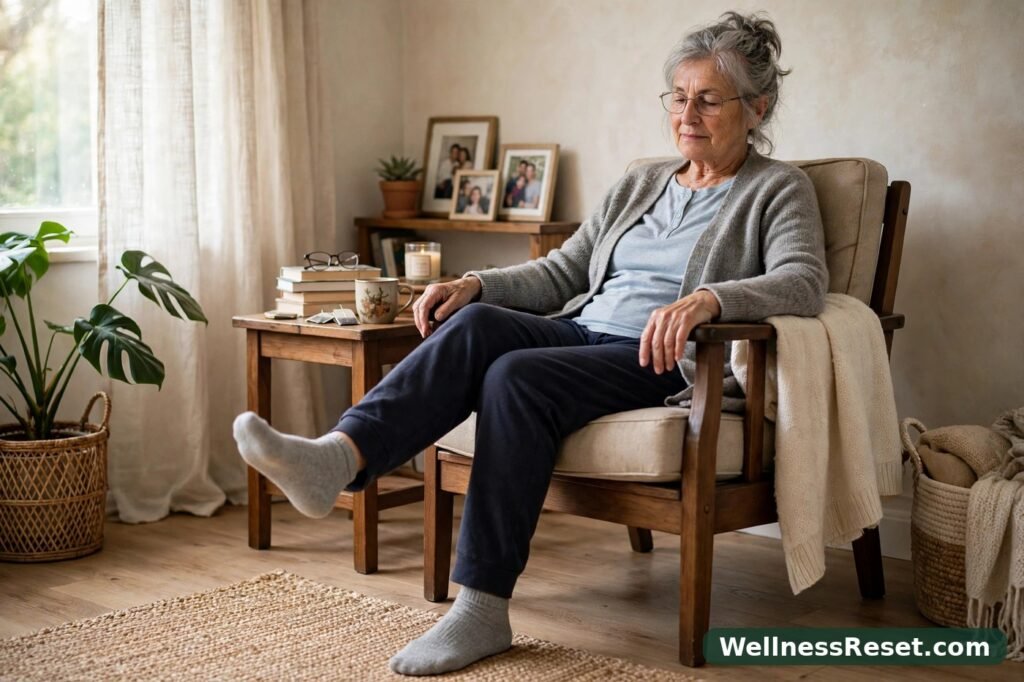
4. Seated Ankle Circles
Lift one foot just a few inches off the floor and circle the ankle slowly, five times each direction. Switch feet.
Best for: ankles that feel rusty first thing, and for anyone who sits for long stretches.
Keep the lift low. This is not a leg raise — the foot barely leaves the floor.

5. Gentle Knee Lifts
Place your hands on your thighs for support. Lift one knee about four to six inches, hold for three seconds, lower slowly. Five per side.
Best for: knees that resist stairs and standing up from low seats.
This is the move most people rush. Do not. The slow lowering is where the benefit lives, and it is also where you stay in control.
6. Seated Side Reach
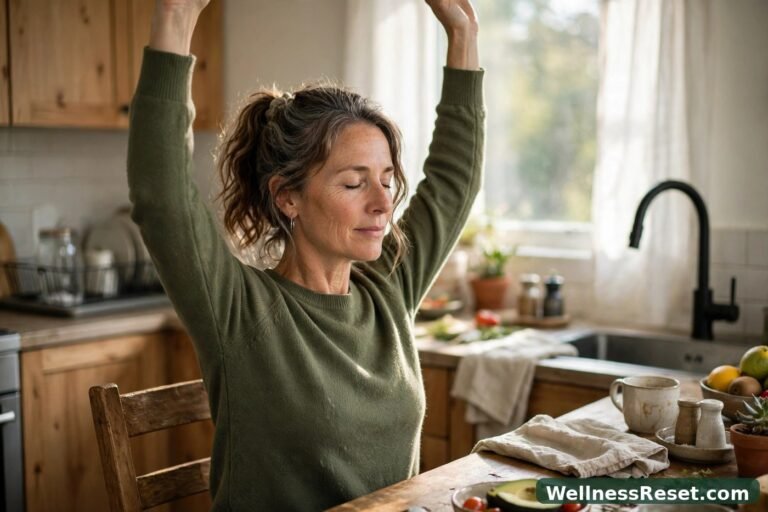
Raise one arm overhead — only as high as is comfortable — and lean gently to the opposite side. Hold five seconds, breathe out, return. Three per side.
Best for: a stiff ribcage and the “I slept wrong” feeling across the back.
If your shoulder does not want to go overhead, rest your hand on your hip and lean from there. The stretch should feel like a yawn, not a tug.
7. Neck Half-Circles
Drop your right ear toward your right shoulder, roll your chin slowly down toward your chest, then up to the left side. That is one slow half-circle. Three each direction.
Best for: a neck that stiffens after reading or watching television.
Never roll your head all the way back. The front half of the circle is plenty, and it keeps the movement safe.
8. Seated Breathing Finish
Sit back, hands resting on your thighs, palms down. Breathe in for a count of four, out for a count of six. Five rounds.
Best for: ending the session calm instead of wired, and for days when the movement itself was enough of a challenge.
Step-by-Step: Your First 15 Minutes
Here is how a first session actually looks, minute by minute:
- Minutes 0–2: Sit down, feet flat, shoulders down. Do the breathing finish first, just two rounds, to settle in.
- Minutes 2–5: Shoulder rolls, then finger fans and fists. Hands and shoulders first, because they wake up fastest.
- Minutes 5–9: Wrist circles, ankle circles, knee lifts. Slow and even. Rest between moves if you need to.
- Minutes 9–12: Side reach and neck half-circles. Keep every range small.
- Minutes 12–15: Finish with the breathing exercise, five full rounds. Stand up slowly, holding the chair arms if you need to.
If you only have five minutes, do steps 1, 2, and 5. A short session you actually do beats a long one you skip.
Quick Fixes for Common Problems
| Problem | Quick fix |
|---|---|
| Hands too stiff to make a fist | Skip the fist entirely — just spread and relax the fingers |
| Knees click or feel uneasy on lifts | Lift lower, only two to three inches, and hold the chair arms |
| Shoulders pinch on the side reach | Keep the arm at shoulder height instead of overhead |
| You feel dizzy during neck circles | Stop, sit still, sip water, and try again tomorrow at half speed |
| One side is much stiffer than the other | Work the stiff side first, but give it fewer repetitions, not more |
| You forget the routine by afternoon | Write the eight move names on a card and keep it beside your chair |

Common Mistakes to Avoid
Forcing a joint to “open up.” This is the big one. If a knee only bends halfway today, halfway is the exercise. Pushing past pain does not speed anything up — it usually costs you the next two days.
Holding your breath. People do this without noticing, especially during knee lifts. If you catch yourself holding your breath, the move is too hard. Make it smaller.
Doing everything on day one. Eight moves sounds modest, but on a stiff morning it is plenty. Start with four moves for the first week and add one more each week.
Comparing today to last month. Arthritis has good weeks and bad weeks. A session that felt easy in October can feel heavy in December. That is normal, not failure.
If you want a slightly longer seated routine once this one feels comfortable, the safe 15-minute routine in Chair Yoga for Seniors builds on the same comfort-first idea. And if you are curious about the building blocks behind these moves, 12 Chair Yoga Poses Every Beginner Should Know explains each basic pose in plain language.

Final Words
Gentle chair yoga for arthritis is not about becoming flexible. It is about making the ordinary parts of the day — opening a jar, getting out of a chair, reaching a shelf — a little less of a negotiation. Fifteen minutes in a sturdy chair, a few slow moves, and an honest rule: comfort first, always.
FAQ
How often should I do gentle chair yoga for arthritis?
Daily is ideal, but even four to five days a week is a good rhythm. Start with five minutes and build toward fifteen over a few weeks.
Does it help with morning stiffness?
Many people find that slow seated movement first thing makes the first hour of the day easier. It is not a treatment, and it will not remove stiffness entirely — but it often loosens things enough to get going.
What kind of chair should I use?
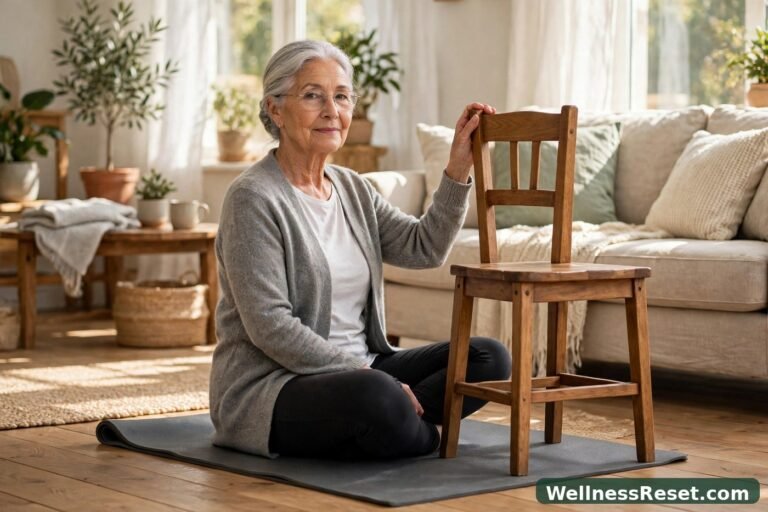
A sturdy, armless-or-armed chair with a firm seat, no wheels, and a height that lets your feet rest flat on the floor. Avoid soft sofas and rolling office chairs.
Can I do this if I have arthritis in my knees?
Yes, with care — keep knee lifts low, move slowly, and skip anything that causes pain. Check with your doctor first, especially if a knee is swollen or recently injured.
What if I miss a few days?
Nothing bad happens. Just restart with the shorter version for a day or two before going back to the full fifteen minutes.