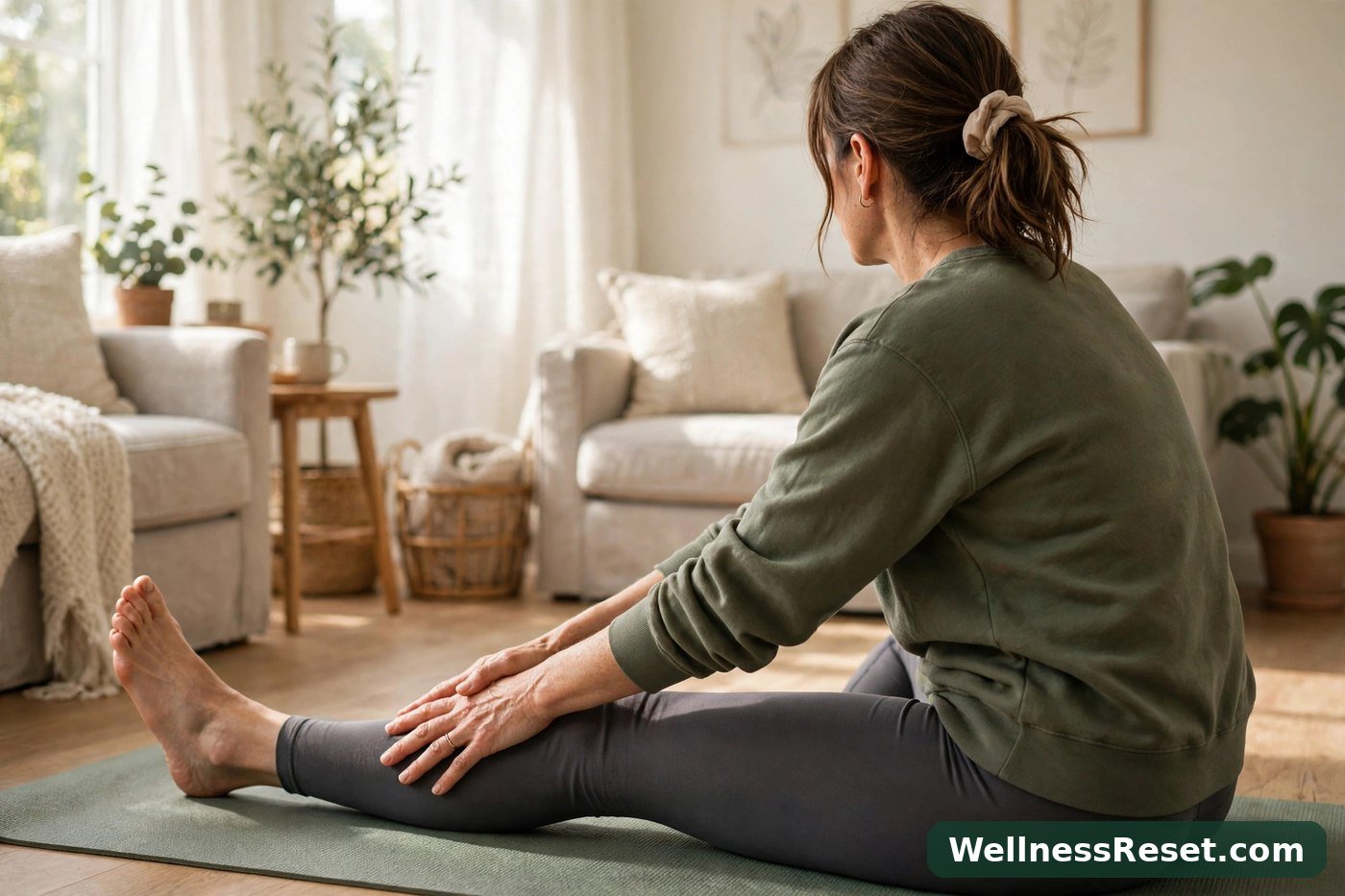
Hamstring Stretches for Tight Legs
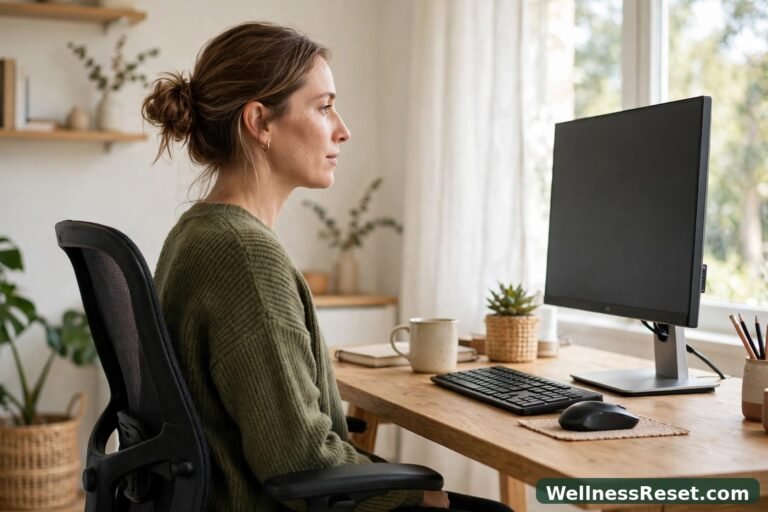
Last Tuesday. Shoes. I bent down to tie the left one and felt it straight away — a tight pull down the back of my thigh. Not pain. More like a rope left out in the cold overnight. Short. Stubborn. I’d sat at my desk six hours, then driven forty minutes home, and somewhere in between my legs had quietly gone on strike. So I did the thing everyone does. Grabbed my leg, yanked it up toward my chest, bounced a few times. Nothing. It never works. I keep doing it anyway.
Tight hamstrings don’t announce themselves. Stairs get stiff. The laundry basket — you bend for it and end up folding sideways instead. Then your lower back starts doing your legs’ job, and a week later it’s your back doing the complaining. The fix is boring. Ten minutes. A few slow stretches. Same thing most days. Not one panicked session when it finally gets bad.
Why Your Hamstrings Get So Tight
Three muscles, back of each thigh. Sitting bones down to just below the knee. They bend your knees, they get you up out of a chair, they do the walking. And most of the day they’re folded up doing nothing. Hours in a chair and they shorten. Then you ask them to lengthen all at once — low shelf, stepping off a kerb — and they object. Loudly, sometimes.
People blame age. It’s mostly not age. I know a woman in her sixties who touches her toes without thinking about it, and a guy in his thirties who can’t get past his knees. Habit, not birthdays. Stretch a few minutes most days and the tissue stays supple. Do nothing for months and it stiffens up. That’s really all there is to it.
One honest caveat before we start: stretching helps with ordinary stiffness from sitting and inactivity. It does not fix a pulled muscle, a tear, or pain that shoots down your leg. If you have sharp pain, numbness, or a recent injury, talk to your doctor first and skip the routine until you get the all-clear. This article is general wellness information only — not medical advice.
What You Need
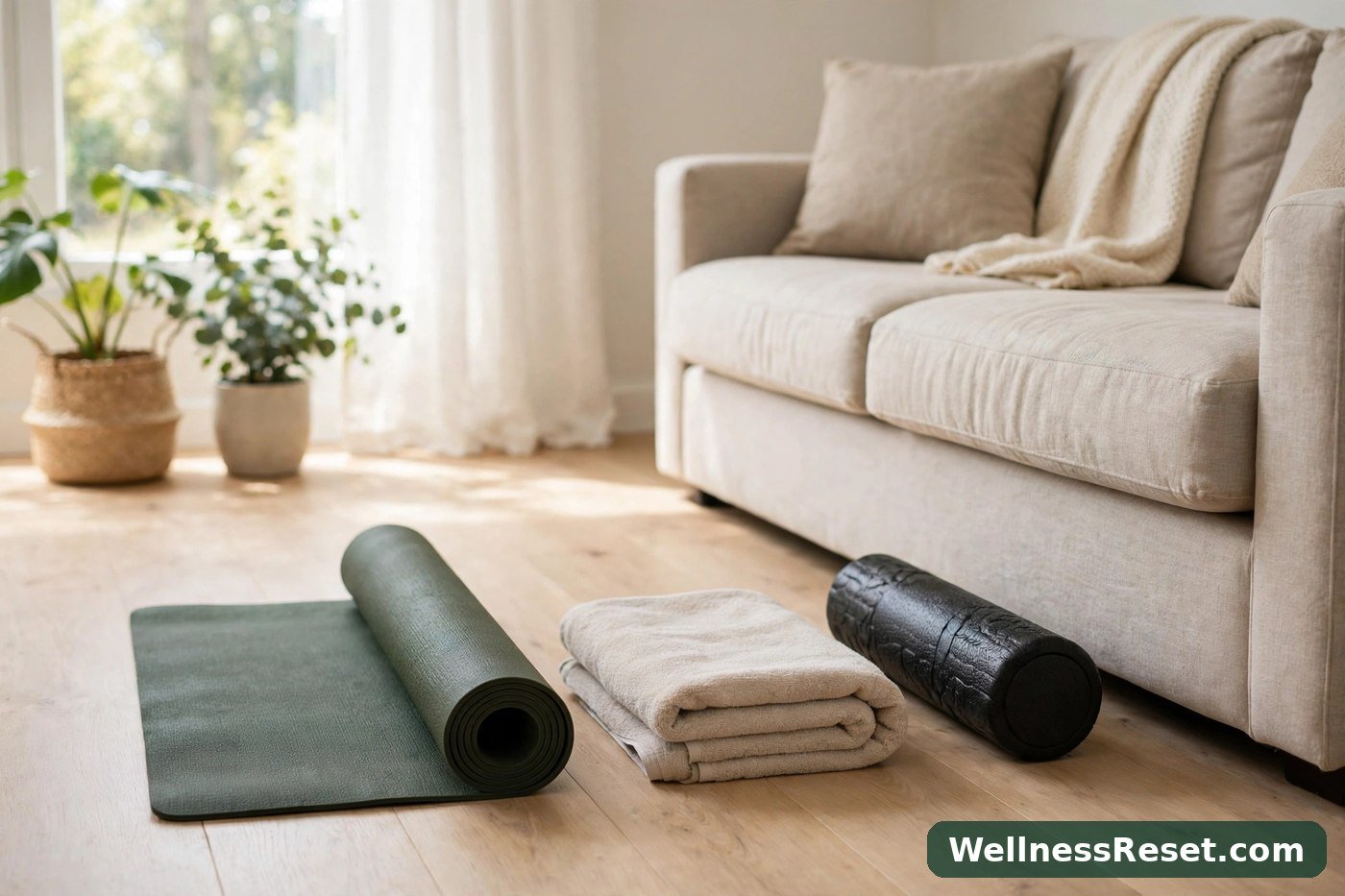
Almost nothing. A mat, or a rug if that’s what you’ve got. A towel or a belt — one stretch needs it. A low step or a sturdy box for another. Clothes you can move in. And ten minutes you’re not rushing. Morning suits me, but honestly? Whatever time you’ll actually do. The “perfect” time you never manage is worth nothing.
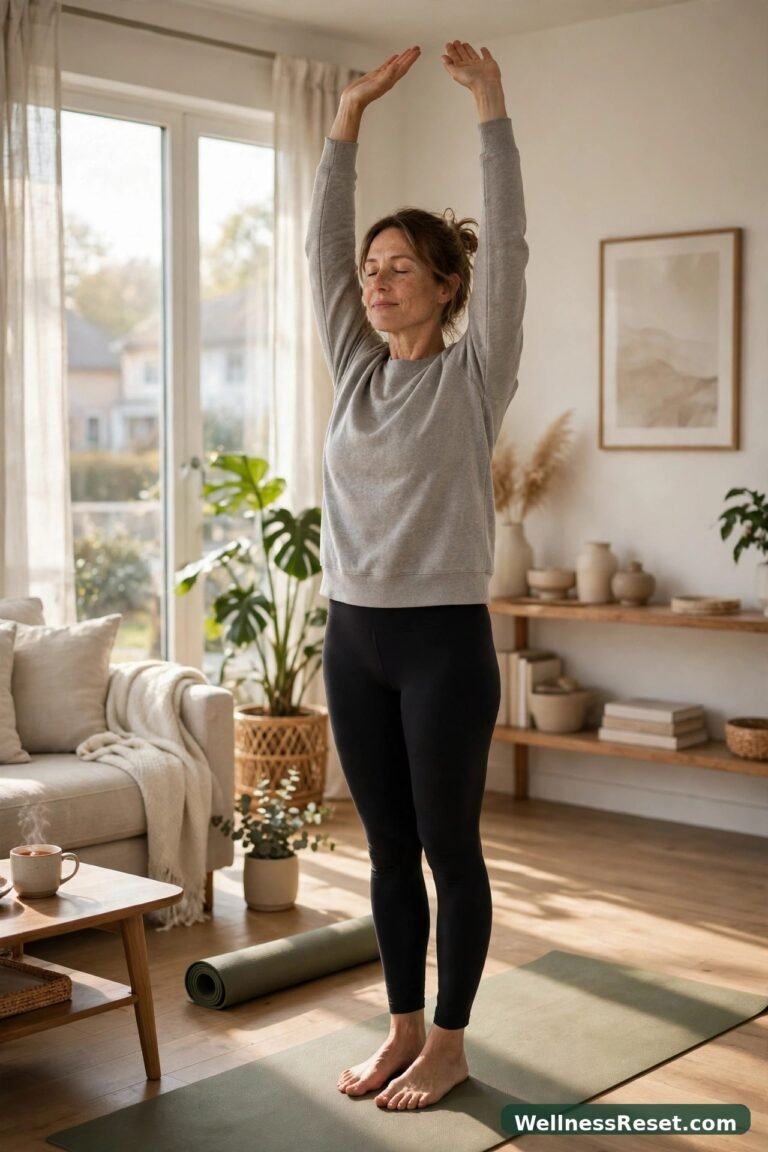
Warm up first. Even a little. Two minutes marching in place, or a quick walk round the house. Cold muscles fight the stretch. Warm ones let go. Everyone skips this step. It’s also the step that changes how the whole thing feels.
The 7 Hamstring Stretches
Both sides, every stretch. 30 seconds each, breathing slowly. Gentle pull, never sharp pain. Can’t manage 30 yet? Start at 15. Build up over a week or two.
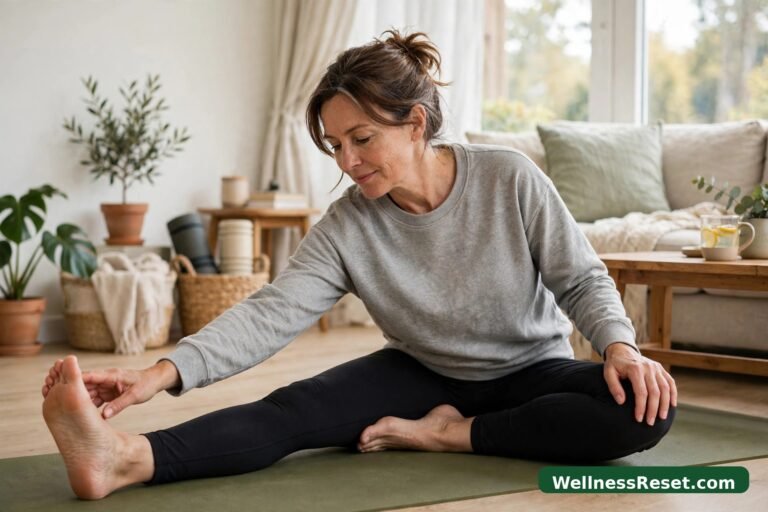
1. Seated Forward Reach
Sit on the floor with one leg straight out in front of you and the other bent, foot against your inner thigh. Sit tall, then hinge forward from your hips — not by rounding your back — and slide your hands down your shin toward your ankle. Stop where you feel the pull. Hold.
Best for: if you sit all day and want the easiest possible starting point.
2. Standing Step Stretch
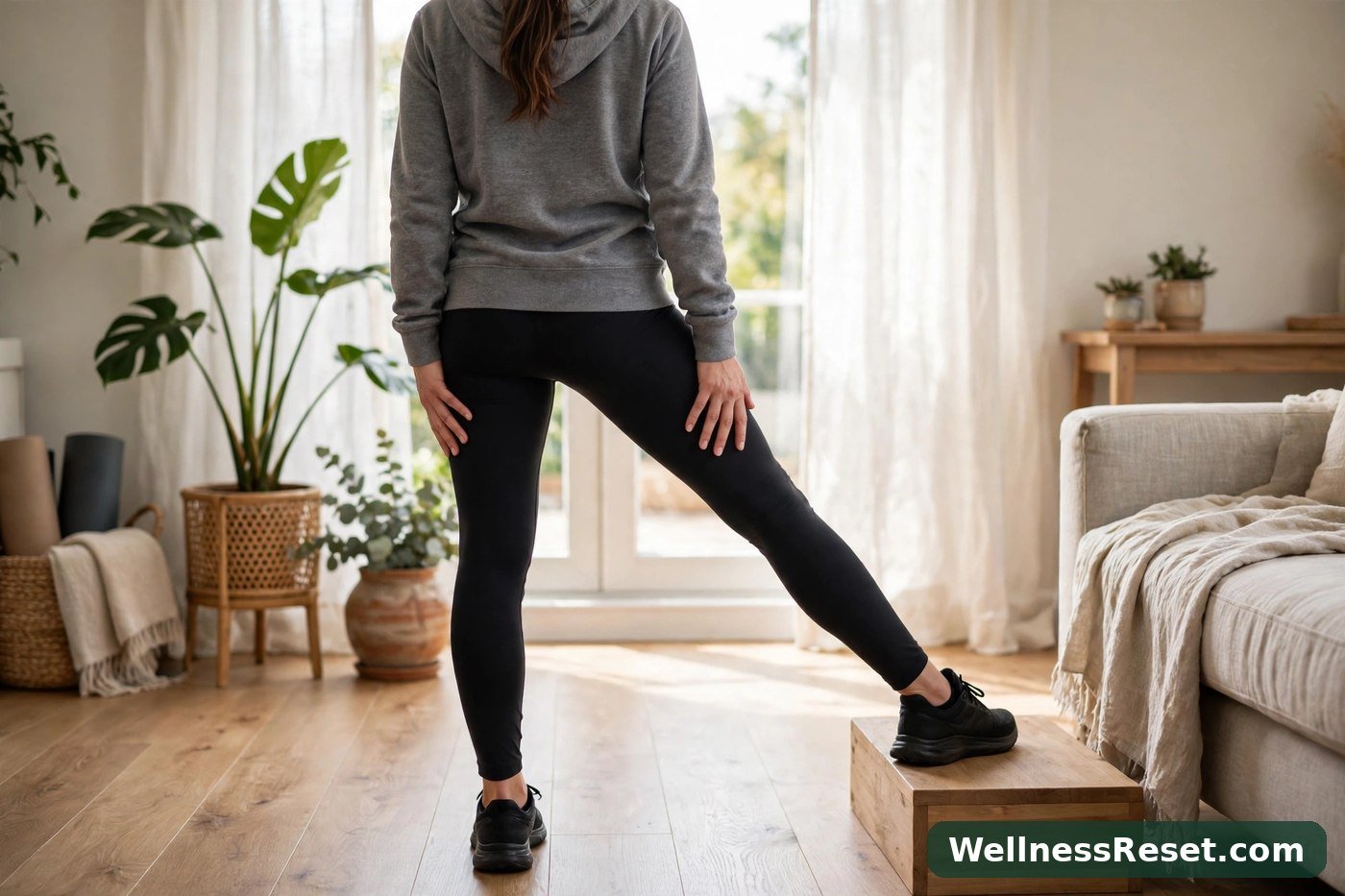
Stand facing a low step or sturdy box. Rest one heel on it, toes pointing up, leg straight. Keep your back straight and lean forward from your hips until you feel the stretch behind your thigh. Hold the back of a chair if your balance is wobbly.
Best for: between tasks — under a minute a leg, and nobody notices.
3. Supine Strap Stretch
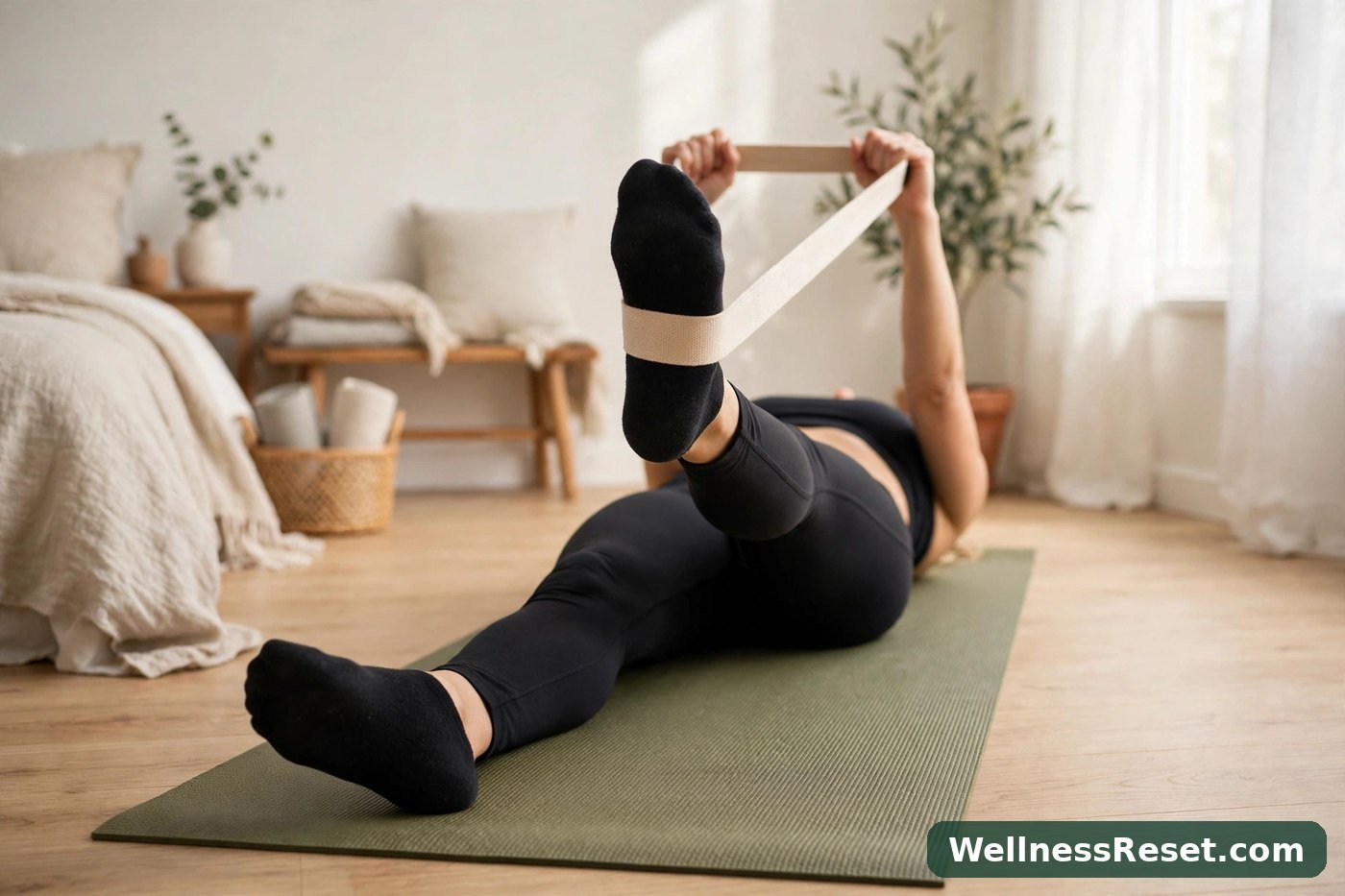
Lie on your back, loop a towel or belt around the arch of one foot, and raise that leg toward the ceiling. Keep the other leg flat on the floor. Gently pull the strap until you feel the stretch, keeping your knee soft rather than locked straight.
Best for: a sore lower back — the floor does all the supporting.
4. Wide-Leg Forward Fold
Stand with your feet a little wider than your hips. Hinge forward from your hips and let your hands rest on your shins, a block, or the floor — wherever they reach without forcing it. Let your head hang. Hold, breathing into the backs of your legs.
Best for: both legs at once, when you’re in a rush.
5. Chair Hamstring Stretch
Sit on the edge of a sturdy chair. Straighten one leg out in front of you, heel on the floor, toes up. Sit tall and lean forward slightly from your hips until you feel the pull. This one is so discreet you can do it during a work call — camera off, obviously.
Best for: office days. And if getting down on the floor is a production, this one skips all that.
6. Kneeling Half Split
Kneel on one knee, then extend the other leg straight out in front of you, heel down. Shift your hips back slowly until you feel the stretch. Keep your hands on the floor or on blocks for support. This one finds the spots the other stretches miss.
Best for: runners, walkers — or that tight spot right behind the knee.
7. Wall Stretch
Lie on your back near a wall, swing your legs up, and rest your heels against it, legs straight. Scoot closer to the wall for a deeper stretch, further away for a gentler one. Stay for a minute or two. It doubles as a nice way to unwind in the evening.
Best for: evenings. Gentle, and it winds you down at the same time.
If you want to pair this routine with its neighbours, our knee stretches work the joint just below, and the lower back stretches help when tight hamstrings are pulling on your back.
A Simple 10-Minute Routine
You don’t need all seven stretches every day. Pick four. Rotate the rest in on other days. A weekday session might look like this:
| Step | What to do | Time |
|---|---|---|
| Warm-up | March in place or walk around the house | 2 minutes |
| Stretch 1–2 | Seated forward reach + standing step stretch | 2 minutes |
| Stretch 3–4 | Supine strap stretch + chair stretch | 2 minutes |
| Stretch 5–6 | Wide-leg fold + wall stretch | 2 minutes |
| Cool-down | Sit quietly, shake out your legs, breathe | 2 minutes |
Showing up matters more than going hard. Five gentle minutes a day beats one heroic twenty-minute session on a Sunday, every time. I found that out the annoying way — one big session after weeks of nothing, and I was sorer than when I started.
Common Mistakes That Make Tight Legs Worse
Bouncing. The old-school bounce. Jerk into the stretch, spring back. The muscle reads that as danger and tightens up to protect itself — the exact opposite of what you wanted. Slow. Still. Every time.
Chasing pain. A stretch should feel like a firm pull, around a 5 or 6 out of 10. Sharp pain, or pain that lingers after you stop, means you’ve gone too far. Ease off. The muscle relaxes when it feels safe, not when it’s forced.
Holding your breath. Almost automatic. You reach into the stretch and your breathing just stops. Do the opposite. Breathe in, and on the way out let the stretch deepen a fraction. Two, three slow breaths per hold. That’s the rhythm.
Rounding your lower back to reach further. Toes, rounded spine — feels like progress. It’s not. It loads your back instead of your hamstrings. Hinge from the hips. Spine long. Hands stop where they stop. How far you reach doesn’t matter. What matters is the feeling in the back of your thigh.
Stretching cold, hard, once a week. Cold muscles, hard effort, long gaps. That’s the recipe for staying tight. Warm up a bit. Go gently. Show up most days.
Final Words
Tight hamstrings aren’t usually a mystery. Not a crisis either. More like a message — a body that’s spent too long folded into a chair. Ten minutes. A few slow stretches. Most days. That’s the whole secret, and honestly it’s not much of a secret. Start with the seated reach and the chair stretch if the floor feels like too much today. Add the others as they get easier. And if something hurts in a way that worries you, or nothing improves after a few weeks of steady stretching, see your doctor instead of pushing harder. Your legs will thank you for the patience.
FAQ
How often should I do hamstring stretches?
Most days. Five to ten minutes, four to six times a week. Daily is fine too, as long as every stretch stays gentle and pain-free.
How long should I hold each stretch?
Aim for 30 seconds per side. If that’s too much at first, 15 seconds works — just build up gradually over a couple of weeks.
Can hamstring stretches help lower back pain?
Sometimes. Tight hamstrings tug on the pelvis, and that adds strain to the lower back. But back pain has a lot of causes. If yours sticks around or gets severe, get it checked by a doctor instead of assuming stretching will fix it.
Is it normal to feel one leg tighter than the other?
Completely normal. Most people have a tighter side. Usually the leg they favour standing or climbing stairs. Give that side a little extra time. Don’t force it.
Should I stretch before or after exercise?
After. Or as a seperate session later in the day. Gentle movement is the right warm-up before exercise. Save the long, still holds for when your muscles are already warm.