7 Calf Stretches for Tight Calves
6:40 in the morning. Third step down from my bedroom. My left calf grabbed — not a full cramp, just that sudden tight band across the back of the leg. The kind that stops you mid-step. Hand on the railing. I’d walked 9,000 steps the day before. Nothing dramatic. Sat at a desk most of the week. And still. There it was.
Tight calves rarely come from one big effort. They build up quietly. Hours of sitting, feet tucked under a chair. A long walk in flat shoes. A week of skipping the cool-down. Then one ordinary morning, a staircase reminds you they exist.
“Just stretch more.” Everyone says it. It’s not wrong, exactly. Just incomplete. Stretching helps when you hit the right muscle, hold it long enough, do it often enough. Ten seconds bouncing on your toes before a run does none of that. So — the routine I actually use. Five minutes. A wall and a step, nothing else.
Why Your Calves Get So Tight
Your calf is really two muscles, one on top of the other. Gastrocnemius — the big one you can see. It crosses the knee, which is why it tightens when you sit with bent knees for hours. Underneath sits the soleus. Flatter. Deeper. Works all day just keeping you upright. Either one shortens and walking goes stiff, ankles lose range, knees and lower back start compensating.
Sitting is the biggest culprit, for most of us. Feet flat on the floor, eight hours. The calf stays shortened the whole time. Add heeled shoes. Or a sudden jump in walking distance. Tightness shows up fast.
None of this means something is seriously wrong. Usually it’s just a stiff, overworked muscle. But — sharp pain, swelling, redness, a calf that stays painful more than a week — skip the stretching, talk to a doctor first. Stretching a real injury only makes it worse. I learned that one the slow way, after stretching through a sore calf for a week and turning a small ache into a limp.
The 7 Calf Stretches
30 seconds per leg, breathing normally. Two rounds if you’ve got the time. Gentle tension — a 5 or 6 out of 10. Sharp pain means too far. Back off.
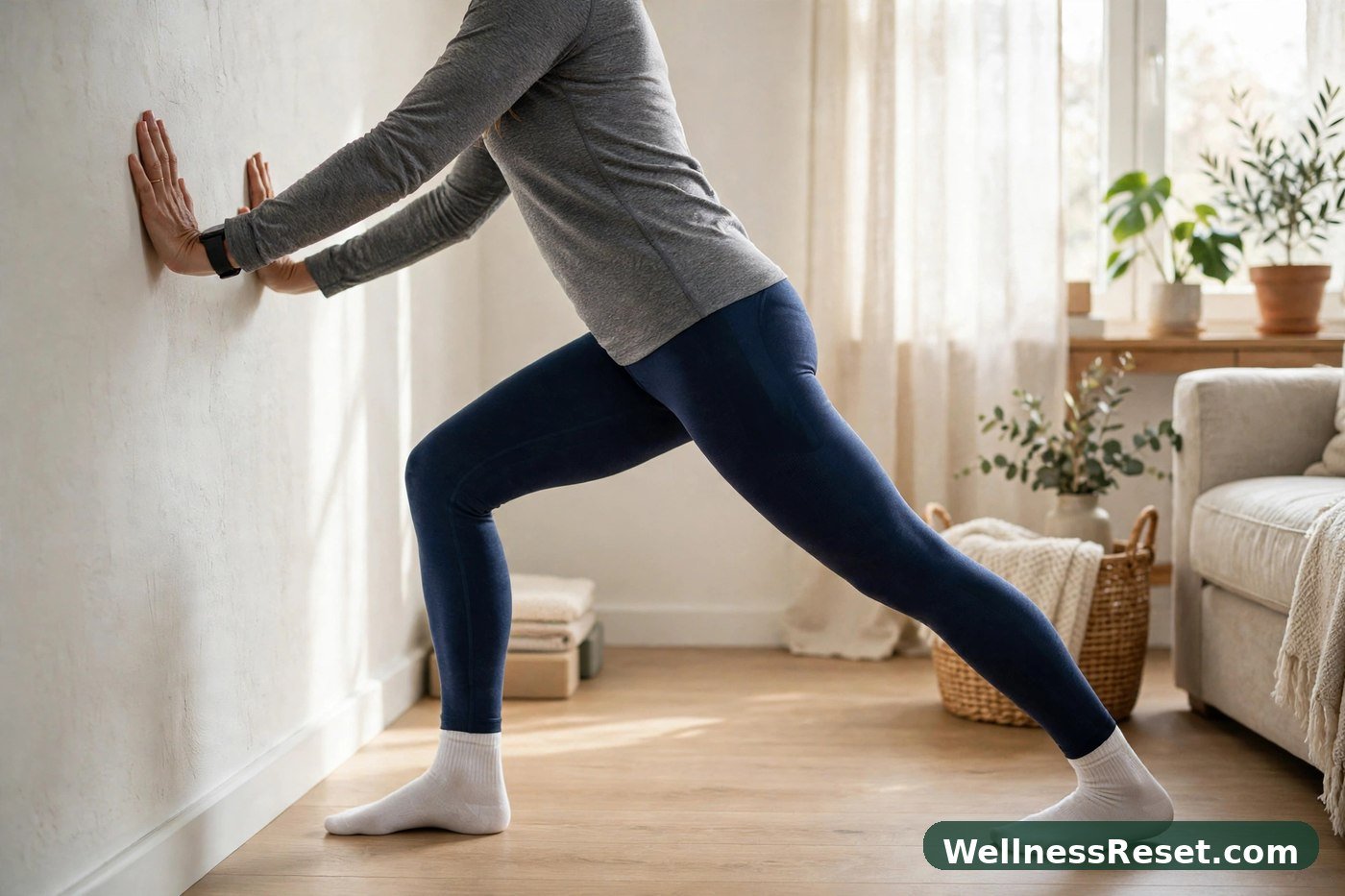
1. Wall Calf Stretch (Straight Knee)
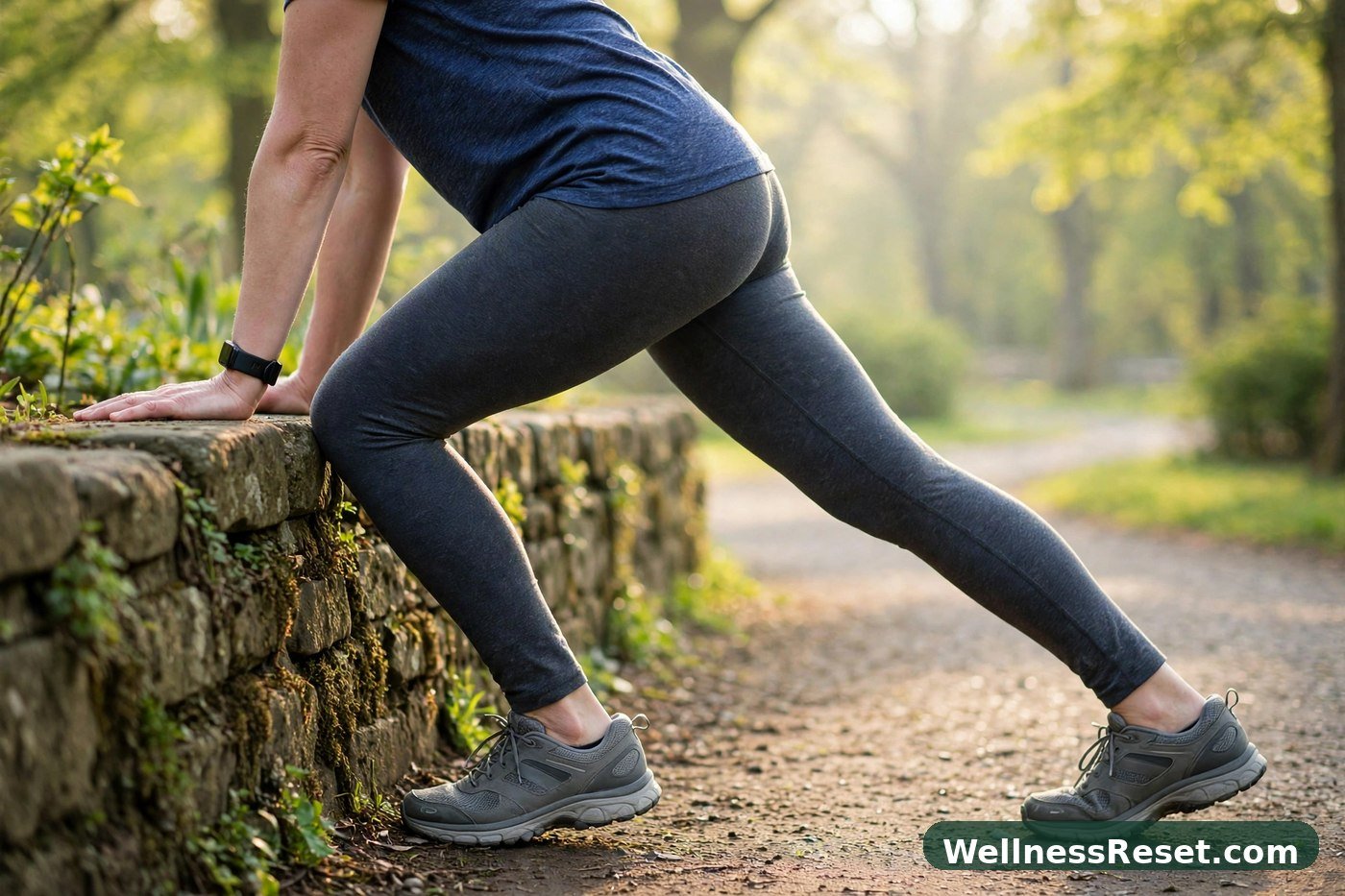
Stand facing a wall, hands flat against it at shoulder height. Step your right leg back about two feet, heel pressed to the floor, toes pointing straight ahead. Bend your front knee slowly until you feel the pull in the back calf. Keep the back heel down — the moment it lifts, the stretch disappears.
Best for: the big gastrocnemius. Morning stiffness. After long walks.
2. Bent-Knee Wall Stretch
Same position as above, but this time bend both knees. Drop your hips a few inches and let the back knee soften. The pull moves lower, closer to the ankle and the Achilles area. Hold 30 seconds, then switch legs. Most people feel this one less, which is why they skip it. Do not — it reaches the deeper soleus, the muscle that holds you upright all day.
Best for: the deeper soleus. People who sit all day. Stiff ankles.
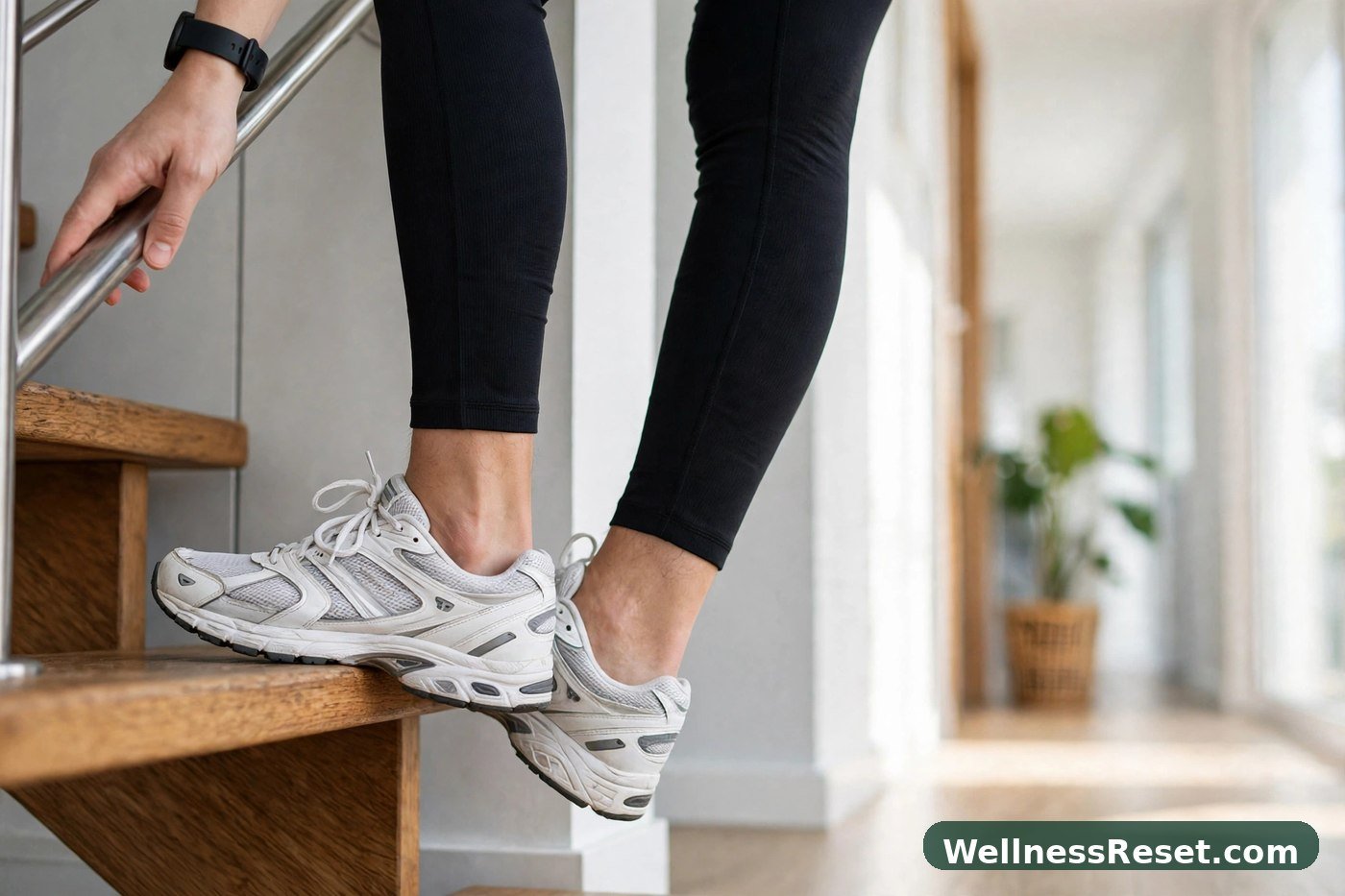
3. Step Drop Stretch
Stand on the bottom step with the balls of your feet on the edge and your heels hanging off. Hold the railing lightly — this is about the calves, not balance practice. Let both heels sink slowly below the step until you feel a steady pull. Hold 30 seconds. Rise up on your toes for a count of two, then sink down again. Three slow rounds is plenty.
Best for: a deep stretch. Runners. Anyone whose calves tighten after standing all day.
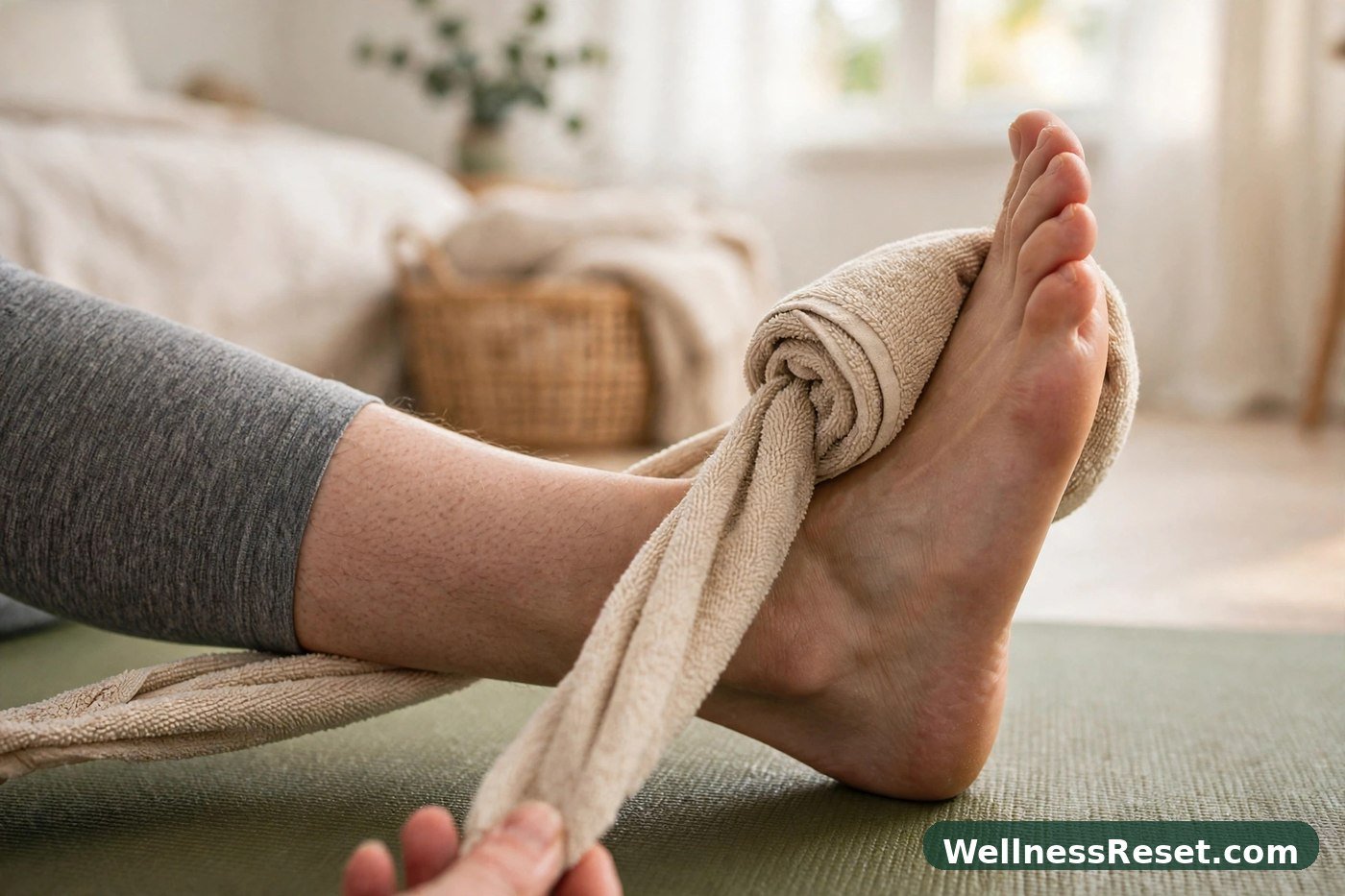
4. Seated Towel Stretch
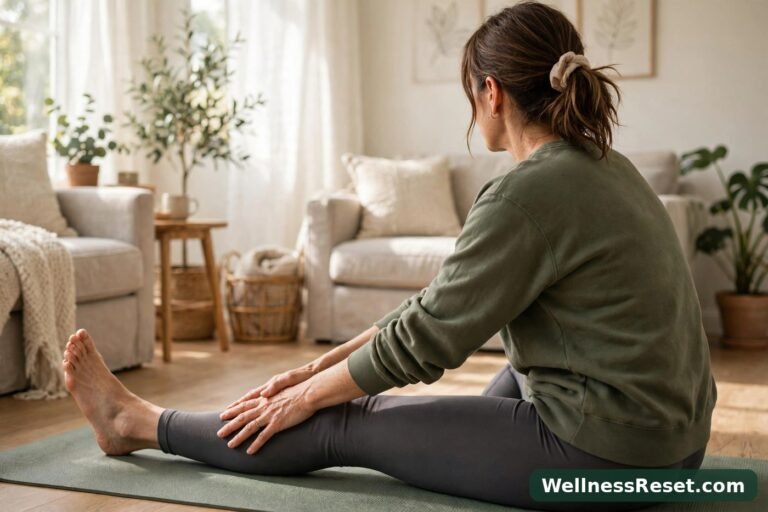
Sit on the floor with one leg straight out in front of you and the other bent, foot flat on the floor. Loop a towel or a belt around the ball of the straight foot and pull gently toward you until you feel the calf stretch. Keep the knee soft, not locked. Hold 30 seconds. I like this one in the evening, sitting on the living room rug while the kettle boils.
Best for: evenings. Stiff mornings when standing hurts. Or a sore ankle on the mend.
5. Downward Dog, the Gentle Version
From hands and knees, tuck your toes and lift your hips up and back. Do not worry about straight legs or heels touching the floor. Pedal your feet — bend one knee, then the other, pressing each heel toward the mat in turn. Ten slow pedals per side, and your calves wake up without any forcing. Kitchen floor works as well as a mat.
Best for: the full lower leg — and it opens the hamstrings and shoulders a bit, too.
6. Foam Roller Calf Release
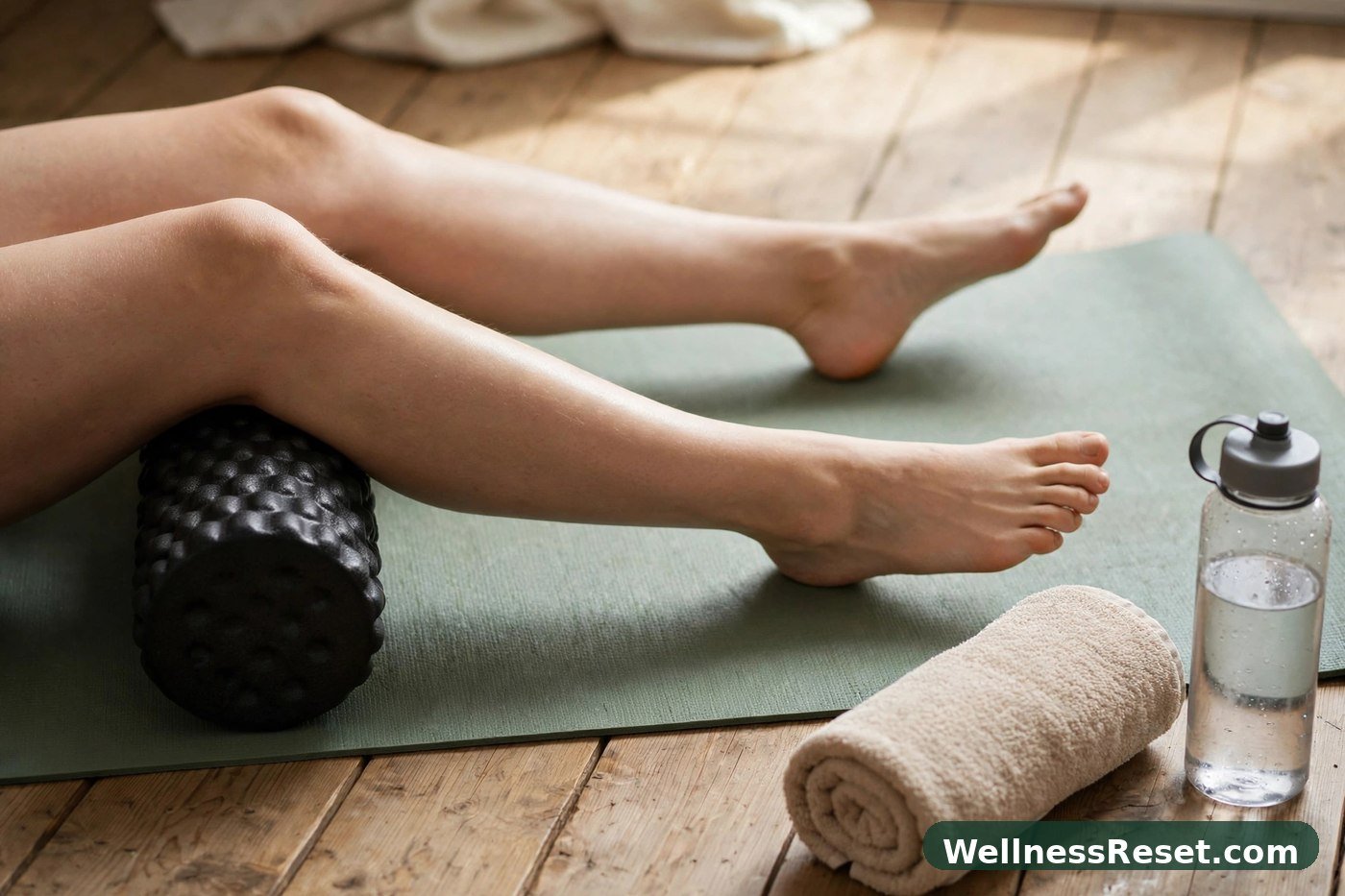
Sit on the floor with a foam roller under one calf and the other foot flat on the floor for support. Lift your hips slightly and roll slowly from just below the knee to just above the ankle. When you hit a tender spot, stop there and hold for 20 seconds. Breathe. The spot will ease, usually within a few breaths. No foam roller? A tennis ball under the calf does a similar job, just over a smaller area.
Best for: knots and tender spots. After workouts. Calves that feel lumpy or ropey.
7. Slow Heel Drops
Stand on a step, rise up on both toes, then lower one heel down very slowly — count to five on the way down. Switch sides. Ten slow drops per leg. This one is technically a strengthening move, but it belongs here because it teaches the calf to lengthen under control. Strong calves that can lengthen slowly cramp far less often than tight, weak ones. Use the railing.
Best for: preventing cramps. Building calf strength. Night cramps.
A Simple 5-Minute Routine
You don’t need all seven every day. The short version, most mornings before breakfast:
- Wall calf stretch, straight knee — 30 seconds each leg.
- Bent-knee wall stretch — 30 seconds each leg.
- Step drop stretch — 30 seconds, three slow rounds.
- Seated towel stretch — 30 seconds each leg, if anything still feels tight.
Four moves. About five minutes. Covers both calf muscles. Foam roller on workout days, heel drops two or three times a week.
If your knees feel stiff alongside your calves, our knee stretches pair well with this routine. And when the tightness runs further up into your back, these lower back stretches help loosen the whole line.
Quick Fixes for Common Calf Problems
| Problem | Quick fix |
|---|---|
| Calves tight every morning | Do the wall stretch before your first cup of tea, 30 seconds per leg |
| Cramp wakes you at night | Gentle towel stretch before bed, plus slow heel drops twice a week |
| Tight after a long walk | Step drop stretch within an hour of finishing, then walk slowly for 5 minutes |
| One calf much tighter than the other | Give the tight side an extra 30-second round, and check your shoes for uneven wear |
Mistakes to Avoid
Bouncing. Bobbing up and down at the end of the range. The muscle reads it as a threat and tightens up instead of letting go. Slow and still wins. Every time.
Holding your breath. Held breath, tense body. A tense body won’t release a muscle. Breathe normally. Count out loud if you have to.
Stretching through sharp pain. A stretch should feel like tension, not pain. Sharp, stabbing, or pinching pain is your body telling you to stop. Respect it, and if it keeps happening, see a doctor before continuing. This article is general wellness information only — not medical advice.
Only stretching the side that hurts. The other calf is usually just as tight. Just quieter about it. Stretch both sides, every time.
Doing it once and expecting miracles. One good session feels nice for an hour. Real change takes daily practice, two or three weeks. That’s the honest timeline — occassionally people feel better in a few days, but most need a couple of weeks of consistency.
Final Words
Tight calves. Usually a small problem with a small fix. Five minutes, a wall, a step, a bit of patience. The routine above isn’t fancy. That’s exactly why it works — it’s easy enough to actually do every day. And that’s where the results come from.
Frequently Asked Questions
How long should I hold a calf stretch?
Thirty seconds per leg. That’s the sweet spot. Less than 15 barely registers. Longer than a minute adds very little. Two rounds of 30 beats one round of a minute.
How often should I stretch my calves?
Daily, if they’re tight. Especially mornings, and after long periods of sitting. Once they feel normal again, three or four times a week keeps them that way.
Can calf stretches stop night cramps?
They can help. Especially the slow heel drops and an evening towel stretch. But night cramps have a lot of causes — dehydration, some medicines, circulation issues. If cramps are frequent or severe, ask your doctor about the cause instead of only stretching around it.
Should I stretch before or after exercise?
After. Or as a separate session. Cold muscles don’t stretch well — walk a few minutes first, then stretch. Save the deep holds for after your workout, or later in the day.