
Sleep Meditation
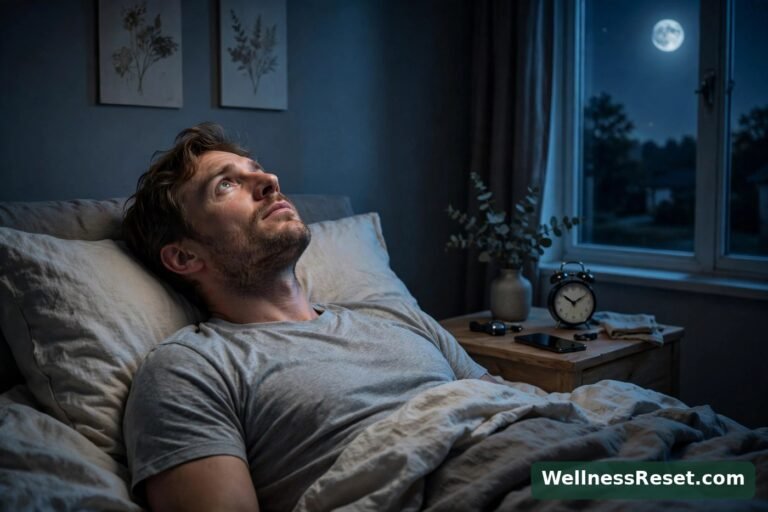
1:47 in the morning. I knew the exact time — I’d checked the clock four times in twenty minutes. My body was tired. Properly tired, the kind where your eyes sting. But my mind was wide awake. Replaying a conversation from work. Then a bill I hadn’t paid. Then — had I locked the front door? I did the usual things. Tossed over. Pulled the blanket up. Tried counting backwards from 100. Lost track somewhere around 73.
That night was years ago. I still remember it clearly. Because that was the night I realised something: you cannot wrestle yourself to sleep. The harder you try, the more awake you feel. Sleep meditation works the other way round. Instead of chasing sleep, you give your mind something quiet to do. And sleep sneaks up while you’re busy.

Why Sleep Meditation Works When “Just Relax” Doesn’t
“Just relax.” Most useless advice a tired person can hear. Relaxing isn’t a switch. Your nervous system doesn’t have an off button you can press with willpower.
What meditation does is simpler than most people think. It gives your brain one boring focus. Your breath. A sound. A slow scan of your body. That focus slowly crowds out the racing thoughts. Heart rate drops a little. Breathing slows. Shoulders — up near your ears all day — finally come down. None of this is dramatic. It’s gradual. That’s the point.
Research backs this up, in a quiet, honest way. Studies on mindfulness and sleep generally find that people who meditate regularly fall asleep faster and report better sleep quality. The effect is real but modest. It helps many people. It is not a cure for insomnia, and anyone who tells you otherwise is selling something. Trouble sleeping for weeks on end? Waking up exhausted every morning, no matter what you try? That’s a conversation for your doctor, not a blog post. This article is general wellness information only — not medical advice.
One more thing worth saying. Sleep meditation is free. No side effects. You can try it tonight, in your own bed. Worst case, you spend ten calm minutes lying in the dark. Hardly a bad outcome.
5 Sleep Meditation Techniques to Try Tonight
You don’t need all five. Pick one that sounds bearable. Try it three or four nights before judging it. A technique that feels useless on night one often clicks on night three.
1. The Body Scan
Lie on your back, arms at your sides. Start at the top of your head. Move your attention down, slowly. Forehead. Jaw. Neck. Shoulders. Arms. Chest. Stomach. Legs. Feet. A few seconds on each spot. Notice tension? Let that muscle go soft on your next breath out.
Don’t rush it. A full scan takes about ten minutes. Most people fall asleep somewhere around their knees.
Best for: a racing mind and a tense body — clenched jaw, tight shoulders, restless legs.
2. Slow Counting Breaths
In through your nose, count of four. Out through your mouth, count of six. That’s it. The longer exhale is the whole trick — it tells your body to slow down. Lose count? Start again at one. No frustration. No scorekeeping.
I like this one because it gives a busy mind a job. Counting takes just enough attention that the worries can’t fully take over — but it’s too dull to keep you awake.
Best for: Overthinkers. Anyone who lies awake replaying the day.

3. Guided Sleep Meditation
If sitting in silence with your own thoughts sounds impossible, let someone else’s voice do the work. A guided sleep meditation — a recording where a calm voice walks you through relaxing your body and breathing — is the easiest starting point. Put your phone face down, set a sleep timer for 20 or 30 minutes, and just listen.
Pick a voice you actually find soothing. Some people love a slow, deep voice. Others find it irritating and prefer someone softer. No right answer. Only the one that lets you drift off.
Best for: beginners. And anyone who tried silent meditation and gave up after two minutes.
4. Visualisation: The Slow Walk
Close your eyes. Picture a place you associate with calm. Not a fantasy beach from a postcard — a real place you remember. A quiet road you walked once. Your grandmother’s garden. A train window at dusk. Walk through it slowly, in your mind. Small details. The sound of your footsteps. The temperature of the air. The colour of the light.
When your mind wanders — and it will, that’s normal — gently walk yourself back to the path. Don’t scold yourself. Just return.
Best for: People who find breathing exercises boring but have a vivid imagination.
5. The 4-7-8 Breath
In quietly through your nose, four counts. Hold for seven. Out slowly through your mouth, eight. Repeat four times. The hold is what makes this one different — it forces your breathing to slow right down. Most people feel noticeably calmer by the third round.
Holding for seven feels uncomfortable? Shorten it. Try 3-5-6 instead. The exact numbers matter less than the slow, steady rhythm. I wrote a full step-by-step on this one — the 4-7-8 breathing method — if you want the details before trying it tonight.
Best for: Nights when anxiety is the main problem, not just tiredness.
A Simple 10-Minute Bedtime Routine
If I were starting from scratch tonight, I’d put it together like this:

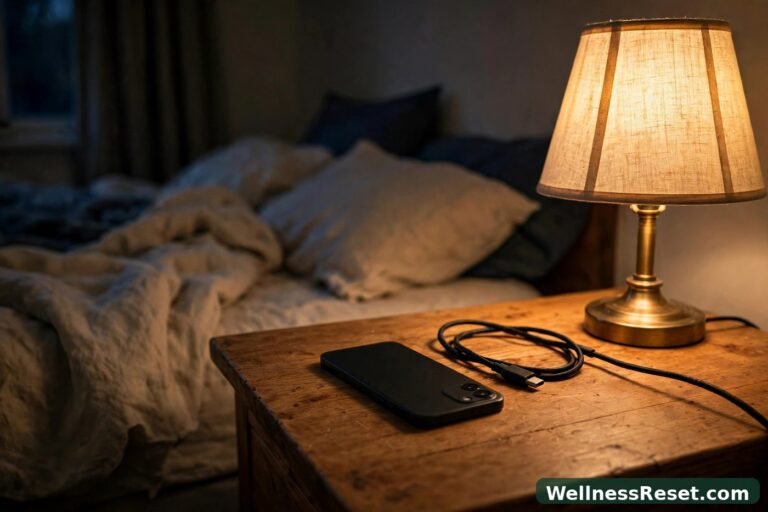
- Lights low, phone away (9:50 pm). Dim the bedroom lights. Put the phone on charge across the room, not under your pillow. Ten minutes of no screen before bed changes more than people expect. If your sleep habits need a bigger reset, these 10 simple sleep hygiene rules cover the basics well.
- Get comfortable (2 minutes). Lie down, blanket at a comfortable weight, room cool — around 18 to 20°C works for most people.
- Three slow breaths. In through the nose, out through the mouth. Let your shoulders drop on each exhale.
- Pick one technique (7 minutes). Body scan, counting breaths, or a guided recording. One only. Don’t switch halfway through because it “isn’t working”.
- Stop trying. If you’re still awake after ten minutes, that’s fine. Stay lying down, keep breathing slowly, and let sleep come when it comes. The moment you start checking the clock, you’ve started the wrestling match again.
When It Doesn’t Work: Quick Fixes
| Problem | Quick fix |
|---|---|
| Mind keeps racing after 5 minutes | Switch to counting breaths — give your brain a job instead of fighting it |
| You fall asleep mid-technique, then wake up again | Don’t restart the full routine; just return to slow breathing until you drift off |
| Guided audio keeps you awake instead | Try a silent technique, or a recording with no music, just a voice |
| Your body feels restless and twitchy | Do the body scan slowly, and spend extra time on your legs and feet |
| You keep checking the time | Turn the clock around. Seriously. Knowing it’s 2:13 am never helped anyone sleep |
| It worked for a week, then stopped | Change technique for a few nights, or move meditation 15 minutes earlier — routine fatigue is normal |
Common Mistakes That Ruin It
Treating it like a test. The minute meditation becomes something you can “fail” at, it stops working. A wandering mind isn’t failure. Noticing it wander and gently coming back — that’s the actual practice.
Doing it with the lights on and the TV running. Meditation needs a quiet, dark room. Half an episode of something in the background isn’t a sleep routine. It’s just watching TV in bed.
Expecting instant results. One night proves nothing. Give any technique at least four or five nights. The people who say “I tried meditation and it didn’t work” usually tried it once. Six minutes. While annoyed.
Starting too late. Already exhausted and frustrated at 2 am? Meditation feels like another chore. It works far better as a wind-down you start when you’re tired but not yet desperate. About 20 to 30 minutes before you want to sleep.
Using your phone in bed “for the meditation app”. This is the trap. You open the app. A notification pops up. Then you’re scrolling. If you use guided audio, start it, put the phone face down across the room, set a sleep timer so it stops on its own. Your bed is for sleeping. Not for one more scroll.
One more honest note. Sleep meditation helped me a lot. It didn’t fix everything. The nights I sleep worst are still the ones where I had too much coffee after 4 pm, or spent the evening arguing on my phone. Meditation is a tool, not a magic shield. The rest of your evening matters too.
Final Words
No special cushion. No paid app. No twenty minutes of perfect stillness. Ten quiet minutes, a dark room, one simple thing to focus on instead of your worries. Start tonight. Pick the technique that sounded easiest — probably the counting breaths, or a short guided recording — and give it a fair few nights before you decide.
Sleep doesn’t respond to force. It responds to calm. And calm, it turns out, is something you can practise.
FAQ
How long does sleep meditation take to work?
Most people notice a difference within a week of nightly practice. Some feel calmer on the very first night. The key is consistency — ten minutes every night beats thirty minutes once a week.
Can sleep meditation replace sleeping pills?
No. Not on its own. Never stop prescribed sleep medication without talking to your doctor first. Meditation can be a helpful addition. Some people find they need less help from other things over time — but that’s a decision to make with a doctor.
Is it normal to fall asleep during sleep meditation?
Yes. Completely normal — and honestly, that’s the goal here. Falling asleep mid-practice means it worked. Daytime meditation is different. At bedtime, it’s a win.
What if I can’t stop my thoughts during meditation?
You don’t have to stop them. The aim is to notice a thought, let it pass, return to your breath or your body scan. Even experienced meditators have busy minds. The practice is the returning, not the silence.
Is guided sleep meditation better than silent meditation?
Neither is better. It depends on you. Guided recordings are easier for beginners — the voice gives your mind something to follow. Silent techniques suit people who find voices distracting. Try both for a few nights. Keep whichever lets you fall asleep faster.