
A Calm Night Time Routine
It was 11:40 pm, I was still answering messages in bed, and my brain felt like a browser with forty tabs open. I finally put the phone down, stared at the ceiling for an hour, and woke up the next morning feeling like I had not slept at all. That was not a mattress problem. It was a wind-down problem. I had gone straight from full-speed day to lights-out, and my body had no idea it was supposed to be asleep.
A good night time routine is not a list of perfect habits. It is a slow dimmer switch for your day. Same order, same rough times, every night, so your body starts to recognise the signals: food done, screens off, lights low, mind quiet. Mine takes about an hour from dinner to bed, and on the nights I skip it, I notice. So do my mornings.
Why a Wind-Down Works Better Than Trying Harder to Sleep
Sleep is not something you can force. The harder you chase it, the more awake you feel, because effort wakes your brain up. A routine works the other way round. It gives your brain the same cues in the same order, night after night, until those cues start to do the work for you. Dim light tells your body evening has arrived. A warm shower drops your core temperature afterwards, which is one of the body’s sleep signals. A quiet activity replaces the day’s noise.
This is also why a night time routine beats a single trick. One herbal tea will not undo three hours of bright screens, a heavy late dinner, and a work email at 11 pm. A routine spreads the wind-down across the evening, so no single step has to carry the whole night.
One honest caveat: a routine helps ordinary, busy-brain sleeplessness. It will not fix sleep apnoea, chronic insomnia that lasts months, or pain that keeps waking you. If that is your situation, talk to your doctor rather than adding more steps to your evening.
The Routine, Dinner to Bed
Think of this as a timeline, not a checklist to score yourself on. Start with three steps and add the rest once the first three feel automatic.
1. Dinner finishes at least two hours before bed
Eat dinner, then close the kitchen. Not dramatically — just stop grazing. A heavy, late meal keeps your digestion working while you are trying to sleep, and for some people it brings on heartburn that wakes them at 2 am. If you are hungry later, a small snack is fine: a banana, a few spoonfuls of yoghurt, a small handful of nuts. Keep it light and keep it early.
What works best in my experience is deciding the snack before the craving arrives. If the rule is “fruit or yoghurt, nothing from a packet after 9 pm,” there is nothing to argue about with yourself at 10:30.
2. The 30-minute screen sunset
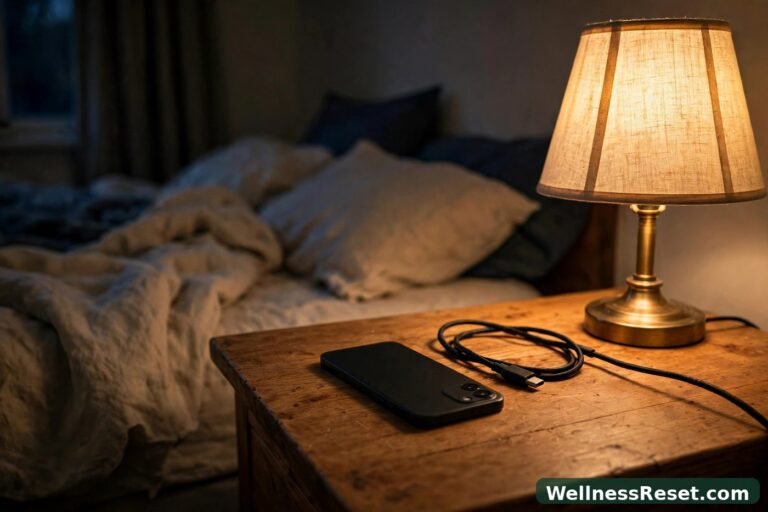
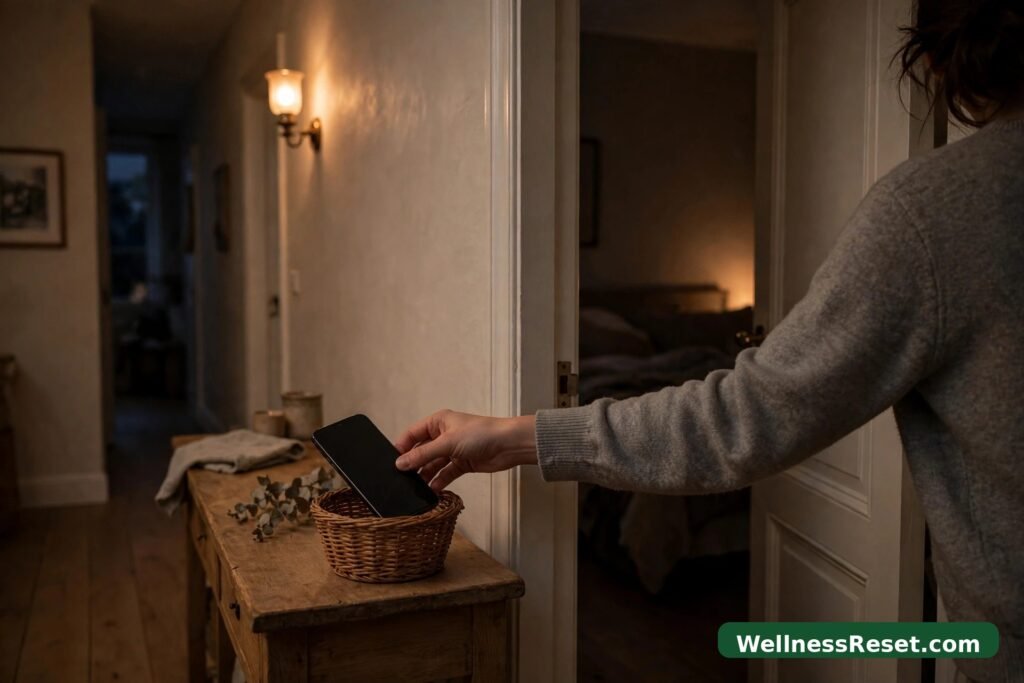
This is the step most people skip, and the one that makes the biggest difference. About an hour before bed, screens go off — or at least go away from the bedroom. Phones charge outside the bedroom if you can manage it. If you need an alarm, a cheap alarm clock costs less than a bad night’s sleep.
If going fully screen-free feels impossible on night one, start smaller: no news, no work messages, no scrolling feeds after 9 pm. A paperback or a podcast is a fine swap. Our own guide to a screen-free wind-down walks through this in more detail: The 30-Minute Digital Sunset for Better Sleep.
3. Dim the house, not just the bedroom
About 45 minutes before bed, turn off the overhead lights and switch to lamps. It sounds trivial. It is not. Bright light is the strongest “stay awake” signal your brain gets, and most living rooms at night are lit like offices. Lower light, and your body starts its evening shift on its own.
While you are at it, cool the bedroom down a little. A slightly cool room — most sleep guides suggest around 18°C — beats a warm, stuffy one. Open a window for ten minutes if the air outside is cooler, or just use a lighter duvet.
4. A warm shower, then cool air
A warm shower 60 to 90 minutes before bed is one of the simplest sleep aids there is. The warm water relaxes tight muscles, and the drop in body temperature afterwards mimics the natural cooling your body does as it prepares for sleep. Ten minutes is plenty. No need for a long, hot soak that leaves you overheated.
After the shower, change into sleep clothes that are actually comfortable, not the old T-shirt with the stretched collar you would never wear outside. Small comfort, real difference.
5. Ten quiet minutes: write it down, then let it go
This is the part that fixed my 2 am wake-ups. Before bed, take a notebook and write three things: anything unfinished that is nagging at you, one thing you need to do tomorrow, and one small good thing from today. That is it. Five lines, two minutes.
The point is not journaling as a hobby. It is parking the thoughts somewhere outside your head, so they stop circling the moment the lights go out. If a worry pops up in bed later, you can tell yourself it is already on the paper. It sounds too simple to work. Try it for a week before dismissing it.

6. The last fifteen minutes in bed: one quiet activity
In bed, do one calm thing until you feel sleepy. Read a few pages of something gentle — not a thriller, not work. Listen to a familiar podcast at low volume. Do a slow breathing pattern you already know, like breathing in for four, out for six, for ten rounds.
If you are not asleep after about twenty minutes, get up. Seriously. Go to another room, sit in low light, read or listen until you feel drowsy, then come back. Lying awake trains your brain to associate bed with worrying. Getting up breaks that link.
A Sample Evening, Hour by Hour
| Time (for a 10:30 pm bedtime) | What happens |
|---|---|
| 8:30 pm | Dinner finished, kitchen closed |
| 9:00 pm | Screens off or out of the bedroom; lamps on, overheads off |
| 9:30 pm | Warm shower, sleep clothes, bedroom cooled |
| 10:00 pm | Notebook: tomorrow’s one task, today’s one good thing |
| 10:15 pm | In bed with a book or quiet podcast |
| 10:30 pm | Lights out |
Shift the whole thing earlier or later to fit your bedtime. The order matters more than the clock times.
Common Mistakes That Undo a Good Night Time Routine
Keeping the phone “just for the alarm.” It is never just for the alarm. One notification, one quick check, and you are scrolling again. Charge it outside the bedroom for a week and see what changes.
Making the routine too long. A 25-step routine lasts three nights. Start with dinner timing, screens off, and the notebook. Add steps only when the first three are boringly automatic.
Chasing a perfect night. One bad night does not mean the routine failed. Sleep varies with stress, illness, weather, and a dozen other things. Judge the routine over two weeks, not one night.
Saving all relaxation for bedtime. If your whole day is wired and you expect ten minutes in bed to undo it, you will be disappointed. A short walk after dinner, or ten minutes of gentle movement earlier in the evening, takes the edge off before the routine even starts. On nights when your body feels restless, a few minutes of seated movement can help too — see Chair Yoga for Better Sleep for a gentle option that does not wake you up.

Troubleshooting: When the Routine Is Not Working
| Problem | Quick fix |
|---|---|
| Mind racing the moment lights go out | Get up, write the looping thought down, return when drowsy |
| Waking at 3 am wide awake | Same rule: low light, quiet activity, no phone, no clock-watching |
| Too hot or too cold in bed | Cooler room, lighter duvet; warm feet with socks if your feet get cold |
| Partner’s schedule is different | Earplugs or a sleep mask, and agree a shared “lights low” time |
| Routine falls apart on weekends | Keep the same wake-up time within an hour — that anchors the whole routine |
Final Words
A calm night time routine is not about becoming a different person. It is about giving the person you already are a decent ending to the day. Dinner, dim lights, screens away, a few quiet minutes on paper, and then bed. Do it in the same order, most nights, and your body starts to do half the work for you.
Start tonight, but start small. Pick the screen sunset and the notebook. Do just those two for a week. If your mornings feel even a little easier, you will know the routine is worth keeping — and you can add the rest at your own pace. For more on building a bedtime routine, the Sleep Foundation’s guide to a better bedtime routine is a solid next read: How to Build a Better Bedtime Routine for Adults.

FAQ
How long should a night time routine be?
Thirty to sixty minutes works for most people, but even twenty consistent minutes beats an hour you only manage once a week. Consistency matters more than length.
What if I work night shifts?
Keep the same order, just shifted: your “evening” is the hour before your daytime sleep. Dark room, earplugs or a sleep mask, and the same screen sunset before bed matter even more when your sleep fights daylight.
Is it okay to watch TV as part of my night time routine?
A calm, familiar show in a dim room is better than scrolling news in bed, but screens in the last 30 minutes before sleep still make falling asleep harder for most people. If TV is your wind-down, finish it before the last half hour.
Does a night time routine help with waking up at 3 am?
It helps with falling asleep and with the quality of the first part of the night. For regular 3 am waking that lasts weeks, or waking with pain, breathlessness, or loud snoring, get checked — a routine cannot fix a medical cause.
Can I do a night time routine if I share a bedroom?
Yes. Agree on a shared lights-low time, use a small reading light instead of the overhead light, and keep the phone charging outside the room for both of you if possible.