
7 Wall and Doorway Stretches to Fix Rounded Shoulders
Catch your reflection in a shop window sometime. Shoulders rolled forward, head jutting out like a tortoise, upper back curved into a permanent question mark. That is the desk posture — and the laptop posture, and the phone posture, and the driving posture. It has a name (upper crossed syndrome, if you want the fancy term), but you probably just call it “my neck and shoulders always hurt.”
The cause is simple: everything you do all day happens in front of you, so your chest muscles shorten, your upper-back muscles stretch weak, and your shoulders drift forward to where the work is. The fix is equally simple — open the chest back up, wake the upper back up. Seven stretches, a wall and a doorway, about twelve minutes.
You already walk past both a wall and a doorway dozens of times a day. This routine just gives those passings a purpose.
The 7 Stretches
1. Doorway Chest Opener (90 seconds)
Stand in a doorway. Place your forearms on the frame, elbows at shoulder height, and step one foot through until you feel a stretch across your chest. Not in your shoulders — in the chest. Hold 45 seconds, then raise your elbows slightly higher and hold 45 more. This is the single most important stretch in this list; the shortened chest is the engine of rounded shoulders.
2. Wall Angels (1 minute)
Back against a wall, feet a few inches out. Press your lower back, upper back, and head into the wall. Raise your arms to goalpost position and slowly slide them up overhead and back down, keeping contact with the wall. Ten slow reps. Your upper back will complain — that is the weak muscle waking up, which is exactly the point.
3. Corner Chest Stretch (60 seconds each side)
Face a corner. Place one forearm on each wall at shoulder height and lean in. Deeper angle than the doorway version, hits the chest from a different line. If doorways feel easy now, this is your progression.
4. Wall Chest Stretch — Single Arm (45 seconds each side)
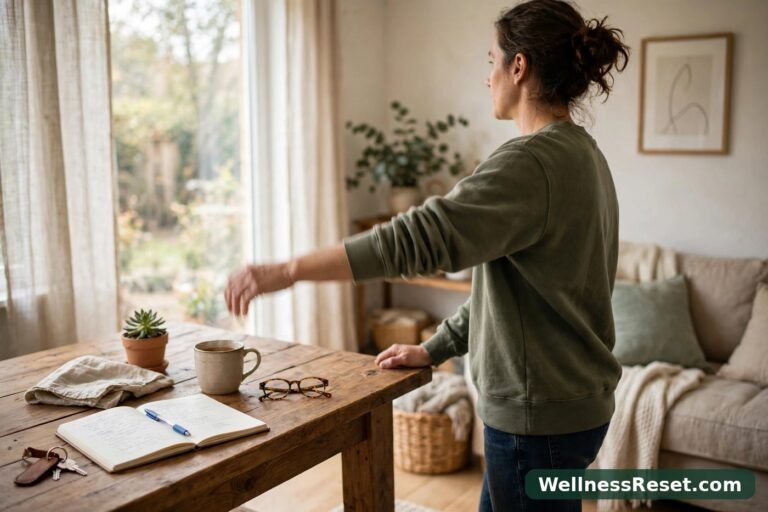
Stand sideways to a wall, arm straight out behind you, palm on the wall. Turn your body gently away until you feel the stretch through the front of the shoulder and chest. This finds the pec minor — the small, deep chest muscle that yanks the shoulder blade forward and is almost always the real culprit.
5. Doorway Bicep/Shoulder Stretch (45 seconds each side)
Same sideways position, but grip the doorframe with your hand at shoulder height and lean forward slightly. You will feel it from bicep through front shoulder. Tight biceps quietly contribute to the inward shoulder roll; nobody stretches them, which is why this one feels surprisingly intense.
6. Wall Slides with Chin Tuck (1 minute)
Back to the wall like #2, but this time: tuck your chin straight back (making a double chin — yes, really) while sliding arms up. The chin tuck retrains the deep neck muscles that are supposed to hold your head up; the wall angels retrain the upper back. Together they reverse the tortoise-neck.
7. Prone Wall Lean (60 seconds)
Face the wall, place both palms on it at shoulder height, and walk your feet back until your body is at an angle. Let your chest sink toward the wall between your arms. This is a standing version of the yoga “puppy pose” — it opens the shoulders and upper back in the exact opposite direction of desk posture. Breathe into your upper back; you will feel it expand.

Best for: desk workers with the forward-head posture, anyone whose neck and shoulders ache by afternoon, people told they “need to sit up straight” (this is how).
Problem → Quick Fix
| Problem | Quick fix |
|---|---|
| Feel it in the shoulder joint, not the chest (#1) | Elbows too high or stepping too far — lower elbows to shoulder height and reduce the lean; stretch should be in the muscle, never the joint |
| Cannot keep contact with the wall (#2, #6) | Totally normal at first — go as far as you can without forcing; range improves within two weeks |
| Chin tuck feels ridiculous | It looks ridiculous too. Do it anyway — it is the single best exercise for forward head posture, vanity aside |
| One shoulder tighter than the other | The mouse-arm side is almost always worse; give it 50% more time |
| Dizzy during wall slides | You are probably holding your breath — exhale on the way up, inhale on the way down |
Common Mistakes
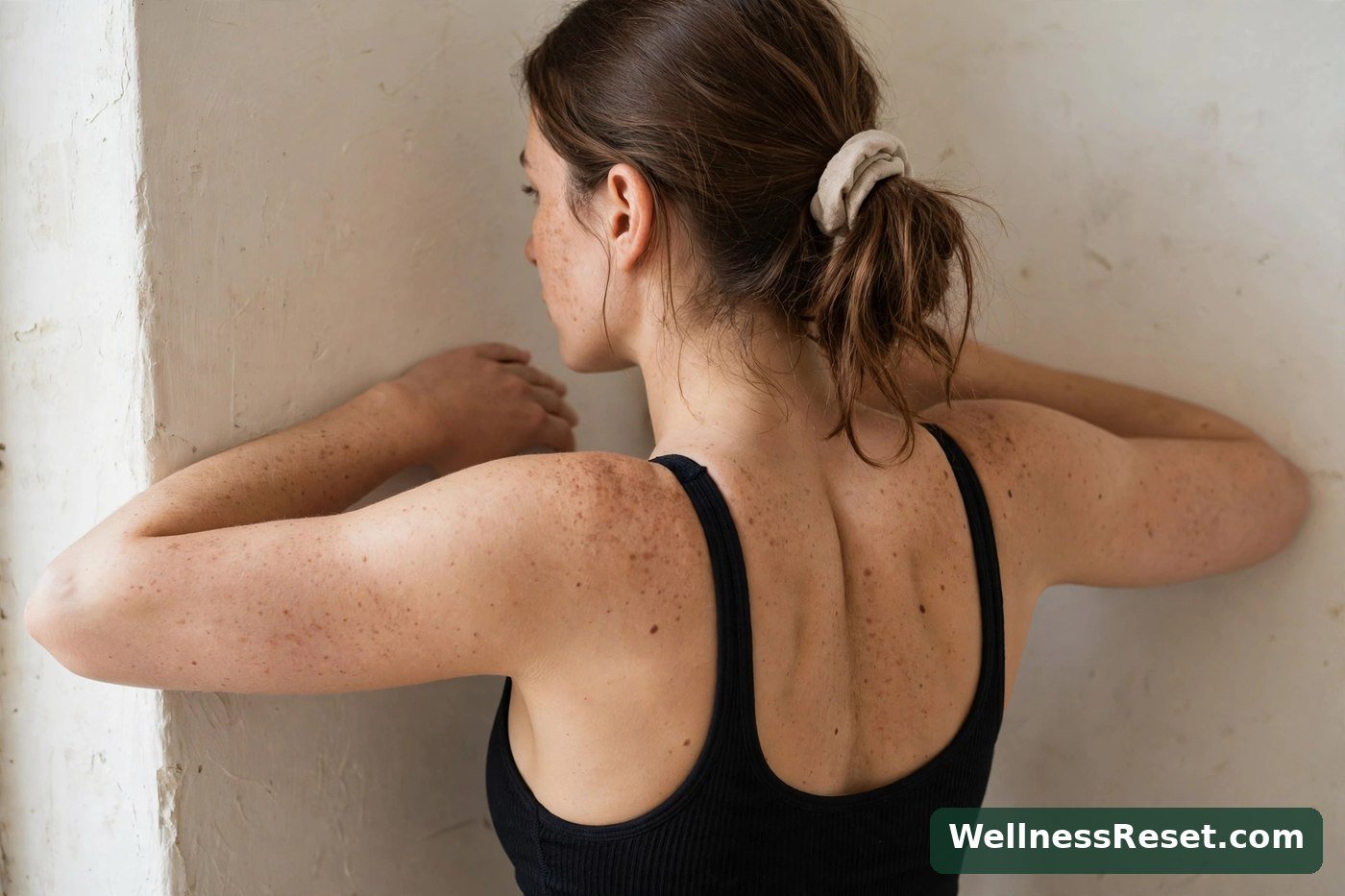
Only stretching, never strengthening. Stretching opens the chest, but the upper back needs to be strong enough to hold the new position. Wall angels (#2) are actually a strengthening move disguised as a stretch — that is why they are in this list. If you want one more, add band pull-aparts later.
Forcing range. Rounded shoulders took years to build; they do not reverse in a week. Aggressive stretching of the shoulder joint causes impingement — the “no pain, no gain” mindset does real damage here. Gentle, daily, patient.
Fixing posture only during the routine. The stretches buy you an opening; your habits decide whether it sticks. Set one phone reminder for 3 PM: “shoulders back and down.” That single cue, repeated for a month, does more than any stretch alone.
Ignoring the hips. Rounded shoulders rarely travel alone — they come with the full desk package. Pair this with the 7 Simple Fixes for Your Posture at a Desk routine for the complete reset.
Final Words
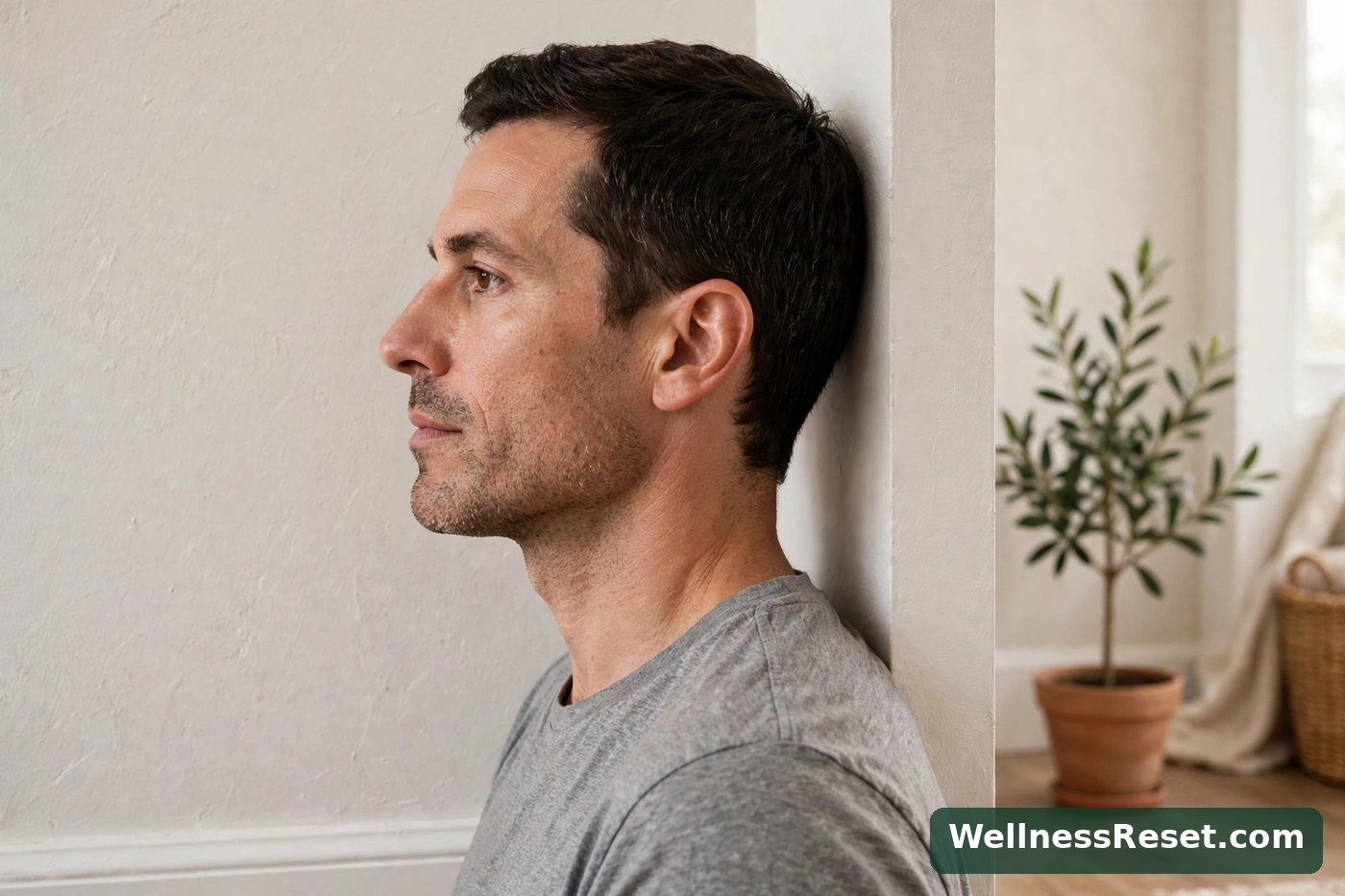
Nobody’s posture got better from being told to “sit up straight” — it got better from opening what is tight and waking up what is asleep. Twelve minutes, a wall, a doorway. Do it four times a week for a month and check that shop-window reflection again.

FAQ
How long until I see a difference?
The feeling — less afternoon neck ache — often improves within a week. Visible posture change takes 4–8 weeks of consistent work. Cameras do not lie; take a side-profile photo now and compare monthly.
Can this fix a hunchback?
It can significantly improve postural rounding (the kind caused by habits). A structural curve like kyphosis or Dowager’s hump needs professional assessment — stretches help but do not reshape bone.
Is cracking my neck/upper back bad?
The occasional self-crack from stretching is generally harmless. Forcing it repeatedly, especially with rotation, is not a good habit — if you feel you need to crack constantly, that stiffness deserves a professional look.
Should I buy a posture corrector brace?
Braces can remind you of good position short-term, but they do the work your muscles should do — long-term use can weaken the very muscles you are trying to train. Stretches plus the 3 PM cue beat a brace.



One Comment