
Breathing Exercises for Fight or Flight
The email arrived at 4:47 pm, and before I had finished reading the first line, my body had already decided something was wrong. Heart thumping. Shoulders up. Breath shallow and high in my chest, like I was about to run for a bus I could not see.
Nothing dangerous was happening. I was sitting at a desk. But my nervous system does not always check the facts before it reacts — it just flips into alert mode, the old fight-or-flight response, and leaves me to deal with the racing heart.
Breathing is the one lever you can reach in that moment. You cannot talk your heart rate down by arguing with it, but you can breathe in a way that tells your body the emergency is over. The exercises below are for those ordinary alert moments: a tense email, a difficult conversation, a near-miss in traffic, the minutes before a presentation. They are general wellness information only, not medical advice, and they are not a treatment for anxiety disorders or panic attacks — if those keep happening, talk to a doctor.
What Fight or Flight Actually Feels Like
Fight or flight is not a metaphor. It is a physical shift: your breathing gets faster and shallower, your heart rate rises, blood moves toward your muscles, and your muscles tense. Useful if you genuinely need to run. Less useful when the “threat” is a calendar notification.
The key detail is the exhale. Short, shallow breathing keeps the alert system switched on. Long, slow exhales do the opposite — they signal safety, and your heart rate usually follows, slowly, within a few breath cycles. That is why every exercise below spends more time on the way out than the way in. It is not about breathing “deeply” in some dramatic way. It is about breathing out longer than you breathe in.
1. The Physiological Sigh — The Fastest Reset I Know
This is a double inhale through the nose, then one long, slow exhale through the mouth. Inhale normally, then — without exhaling — sniff in a second, shorter breath on top of the first, so your lungs feel properly full. Then exhale slowly through pursed lips, taking about twice as long as the inhale took.
Do it 2–3 times. That is the whole exercise, and it takes under a minute.
Best for: the immediate moment — right after the tense email, just before you walk into a difficult meeting, or in the car after a near-miss.
What I like about this one is that it does not ask you to count, visualise, or remember a pattern while your mind is racing. Two sniffs in, one long breath out. Even occassionally, when my mind is too scattered for anything structured, this is the one I can still do.
2. Extended Exhale Breathing (4 In, 6 Out)
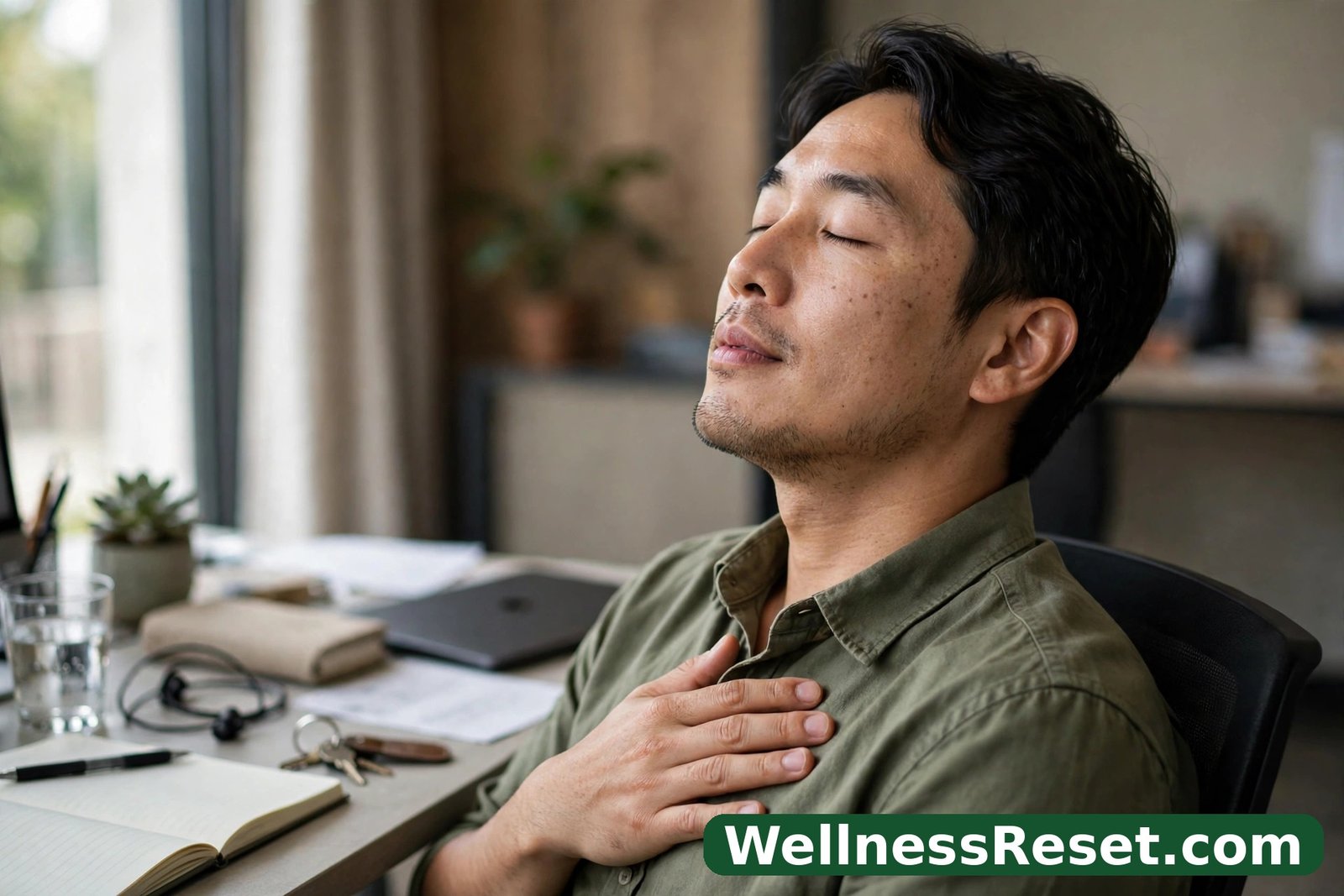
Sit somewhere you will not be interrupted for two minutes. Breathe in through your nose for a count of 4, then breathe out slowly through your mouth for a count of 6. If 6 feels too long at first, start with 4 in and 5 out, and build up over a few days. The exact numbers matter less than the ratio: the exhale is longer than the inhale.
Do 6–8 rounds, about two minutes total.
Best for: the minutes after an alert moment, when the initial rush has passed but your heart is still beating faster than usual and your thoughts are still jumpy.
Do not force the counts. If you are gasping by round three, your exhale is too long — shorten it. Gentle and sustainable beats a perfect ratio you cannot maintain.
3. Humming Exhale — For When Your Mind Will Not Stop Talking
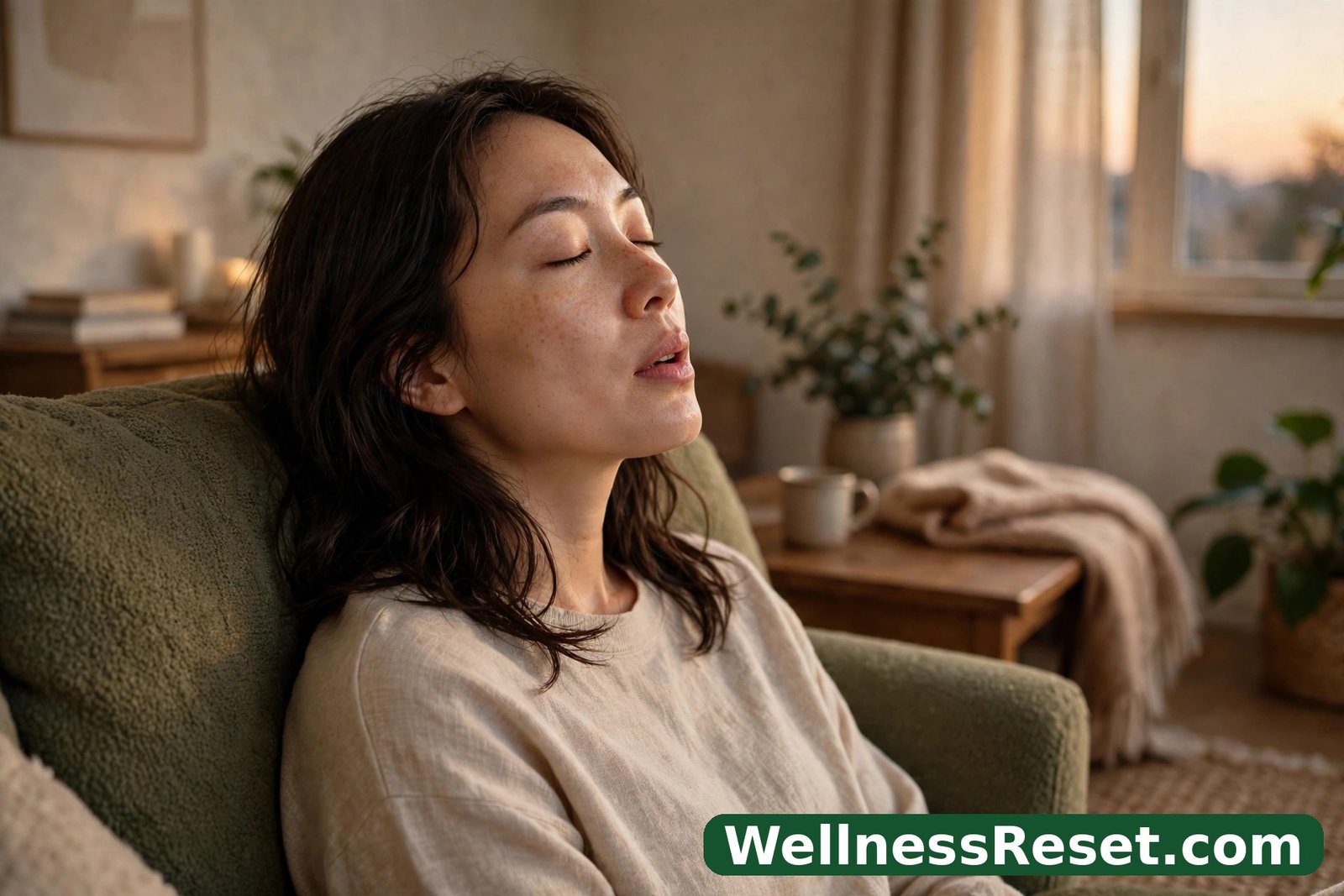
Breathe in normally through your nose. On the exhale, hum — a low, steady hum, like a quiet “mmm” — for as long as the breath comfortably lasts. Feel the vibration in your chest and throat. Then breathe in again, normally, and repeat for 5 rounds.
Best for: racing thoughts, the replay loop after an argument, and evenings when your body is still wired hours after the stressful moment.
This one feels slightly silly the first time. Do it anyway, preferably somewhere private if that helps. The vibration is not decoration — the long, steady exhale is doing the work, and the hum simply keeps it slow and even without you having to count.

4. Counted Breathing With a Pause (4-2-6)
Inhale for 4, hold gently for 2, exhale for 6. The short pause is the point: it breaks the automatic shallow-breathing rhythm your body fell into, and gives you a moment of stillness between in and out. Repeat for 5 rounds, about two minutes.
Best for: moments when you feel out of control of your breathing, or when the extended exhale alone is not quite enough to settle you.
If holding your breath feels uncomfortable or makes you dizzy, skip the pause and go back to the simple 4-in-6-out.
For a different structured pattern, see this box breathing guide.
5. Walking Breath — Moving the Alert Out of Your Body
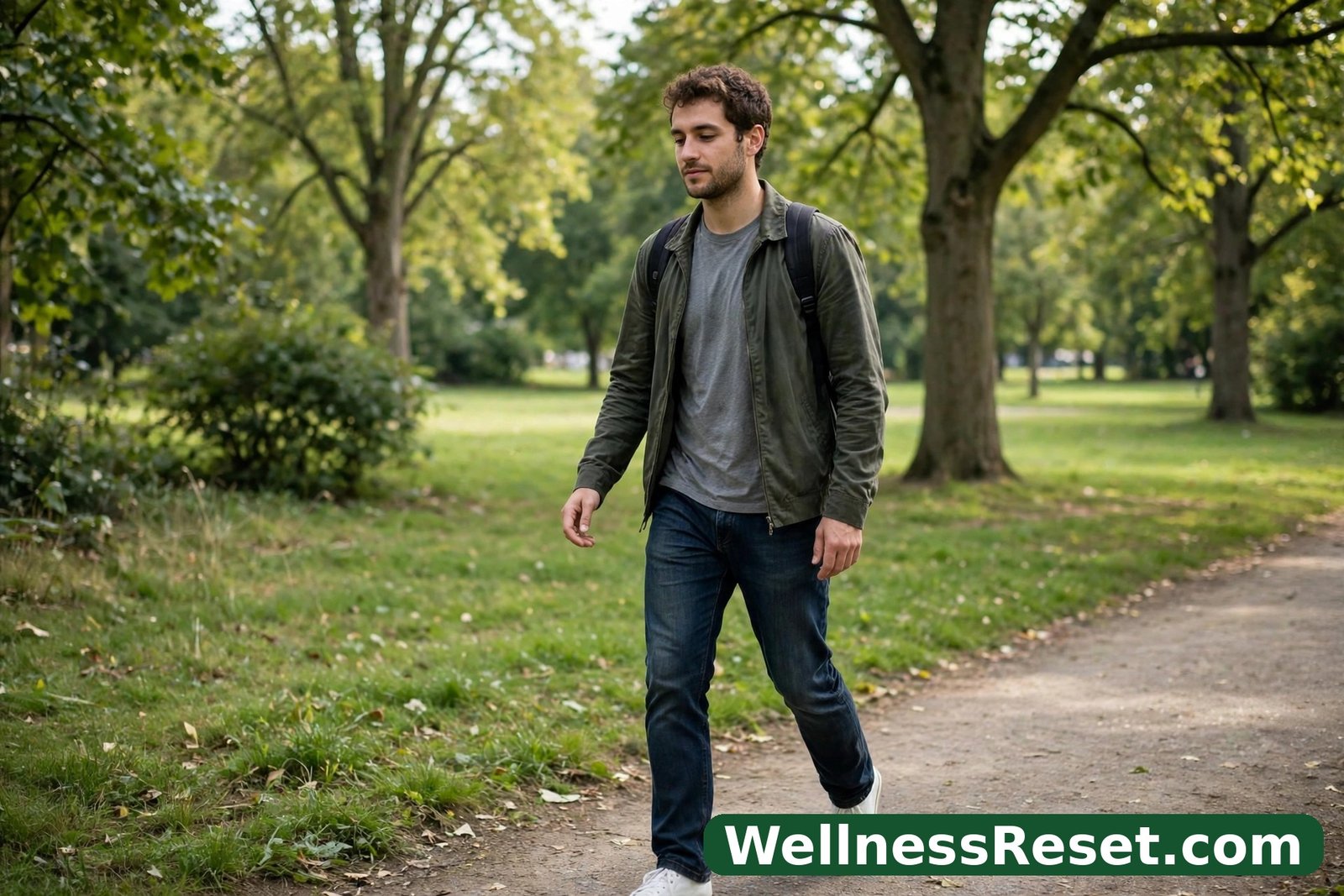
Sometimes sitting still makes alert mode worse. If you can walk, walk — slowly, around the room, down the corridor, around the block. Breathe in for 3 steps, out for 5 steps. Let your arms swing. Do not rush; the pace should feel unhurried, almost lazy.
Best for: restlessness, the urge to pace, and alert moments at work when sitting at your desk feels impossible.
If anxiety-type moments are a regular pattern for you rather than an occasional one, these breathing exercises for anxiety cover a wider everyday toolkit.
A 3-Minute Sequence for a Real Alert Moment
When it actually happens, you will not remember a list. Remember this order instead:
- Minute 0–1: Physiological sigh, 2–3 times. Fast reset first.
- Minute 1–3: Extended exhale breathing, 4 in and 6 out, for 6 rounds. Steady yourself second.
- After that: Walk, hum, or sit quietly for a minute — whichever your body wants. Do not jump straight back into the email or the conversation.
When to stop: stop if you feel dizzy, light-headed, tingling that does not fade, or short of breath that gets worse. Breathe normally, sit down, and rest. Breathing exercises should feel calming, not like an endurance test. If alert moments, panic, or breathlessness keep happening, talk to a doctor — breathing techniques are a coping tool, not a diagnosis or a treatment.
Quick Fixes for Common Alert Moments
| Problem | Quick fix |
|---|---|
| Heart racing right after a shock or tense message | Physiological sigh, 2–3 times, immediately |
| Still wired a few minutes later | Extended exhale, 4 in and 6 out, 6–8 rounds |
| Mind replaying the moment on a loop | Humming exhale, 5 rounds, somewhere quiet |
| Breathing feels out of control | Counted breathing with a pause, 4-2-6, 5 rounds |
| Cannot sit still, need to move | Walking breath, 3 steps in and 5 steps out, 2 minutes |
| Alert mode returns an hour later | Repeat the sigh, then deal with the trigger if you can |
Common Mistakes
Breathing too hard. Big, forceful breaths can make dizziness worse. The goal is slow and gentle, not maximum lung capacity.
Counting rigidly while panicking. If counting stresses you more, drop the numbers and just make the exhale longer than the inhale. The ratio matters; the exact count does not.
Expecting instant calm. Your heart rate will not drop to resting in 30 seconds. Give it two to three minutes, and judge by “slightly calmer,” not “completely fine.”
Using breathing instead of addressing the trigger. Calm down, then answer the email, have the conversation, or change the plan. Breathing buys you clear thinking; it does not do the thinking for you.
Practising only when stressed. Do the sigh once a day when you are calm, so it is automatic when you actually need it.
Final Words
Fight or flight is not a flaw. It is an old system doing its job, sometimes at the wrong time. Breathing is not about switching it off by force — it is about giving it a clear signal that the emergency has passed.
Learn the sigh today, while you are calm. Then, the next time your body jumps before your mind has caught up, you will have something to reach for that actually works.
FAQ
How quickly do breathing exercises calm fight or flight? The sigh can take the edge off within a minute. Full settling usually takes 2–3 minutes of slow exhale-focused breathing. Expect “calmer,” not instant stillness.
What is the best breathing exercise for fight or flight? The physiological sigh — double inhale through the nose, long slow exhale through the mouth — is the fastest for an immediate alert moment. Extended exhale breathing works best for the minutes after.
Can breathing exercises stop a panic attack? No. They are a general wellness coping tool, not a treatment. If panic attacks keep happening, talk to a doctor for proper assessment and support.
How often should I practise these exercises? Practise the sigh once a day when calm, so it is automatic when needed. Use the other techniques as needed in real alert moments.
What if breathing exercises make me dizzy? Stop, breathe normally, and sit down. Shorten the exhale next time, or drop the breath-hold entirely. Persistent dizziness or breathlessness needs a doctor, not a different technique.